
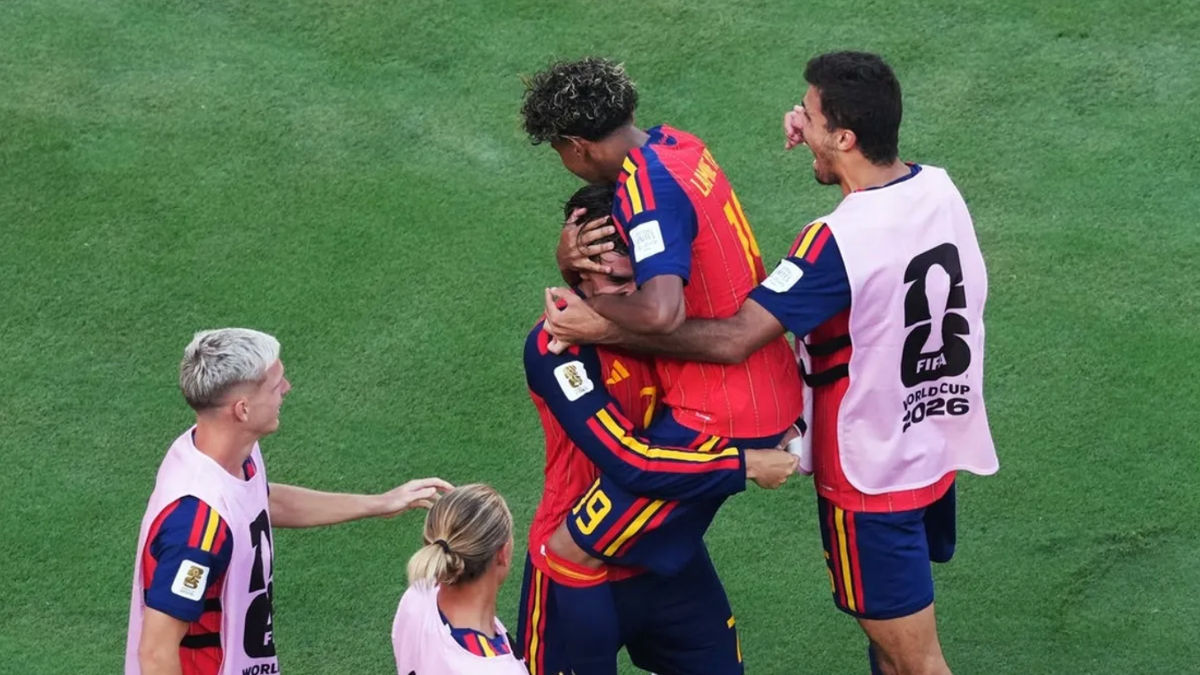
It took eight matches into his joint-record sixth World Cup. But in Sunday’s final, a 39-year-old Lionel Messi may have finally become a liability to his national team, at least when playing against the very best competition the world has to offer.
Don’t get it wrong. Messi wasn’t at fault for Argentina’s 1-0 loss directly. And keeping him on the field for the entirety of the 120-minute encounter was probably the best of manager Lionel Scaloni’s imperfect options.
But at this stage in Messi’s career, he has to actively conserve energy on the defensive side of the ball to make sure he can be effective as an attacker in the late stages. And that put Argentina at an almost impossible disadvantage as they tried desperately in vain to limit Spain’s possession while essentially defending a technically gifted La Roja squad 11 on 10.
The totals from an Argentine perspective were ugly, even if the score was close. Spain had nearly twice as much of the ball. They completed more than twice as many passes, and had four times as many touches in the opposition box. And while it was clear Lionel Scaloni wanted to try and disrupt the Spaniards’ exceptional ball movement with occasional pressure at times, it was just as clear he had to be very selective about when to apply it.
You might look at the match summary and suspect some of this imbalance owed to Enzo Fernandez being sent off toward the end of normal time. But no. Spain’s statistical superiority was more or less distributed evenly across time. Ironically, it was only down a man — and a goal — when Argentina finally managed a shot during the second half of extra time.
Messi was still the primary creative source of those late chances, showing why he probably had to remain on the field. He remains the world’s most gifted player with the ball at his feet. There’s just a bigger defensive price paid for using him.
You might also argue Scaloni got another crucial decision wrong.
If the plan was to sit as deep and play as direct as Argentina did, Lautaro Martinez — not Julian Alvarez — is the far better back-to-goal center forward. In the end, the Inter Milan man never got off the bench, perhaps because of substitutions forced by injuries or Fernandez’s dismissal.
But in retrospect, the needle was always going to be exceptionally difficult to thread against a team as good on the ball as Spain. The good news for Messi, should he long to continue with Argentina, is that there is only one Spain.
Third Time the Charm?
And so Argentina became the second team in as many World Cups to fall short of back-to-back titles. Now the question is whether Spain can be the first repeat winners since Brazil in 1958 and 1962 while playing in 2030 as a tournament co-host.
There’s no obvious reason why not. Spain were actually one of the younger sides in 2026, starting an XI with an average age of 27.0 or younger on six occasions. On Sunday, they were the first team ever to send two teenagers out in the formation for a World Cup Final, attacker Lamine Yamal and defender Pau Cubarsi.
Four years later, conventional wisdom says a La Roja squad with Lamine entering his prime at age 22 would be even better.
Who Joins Spain as Early 2030 Contenders?
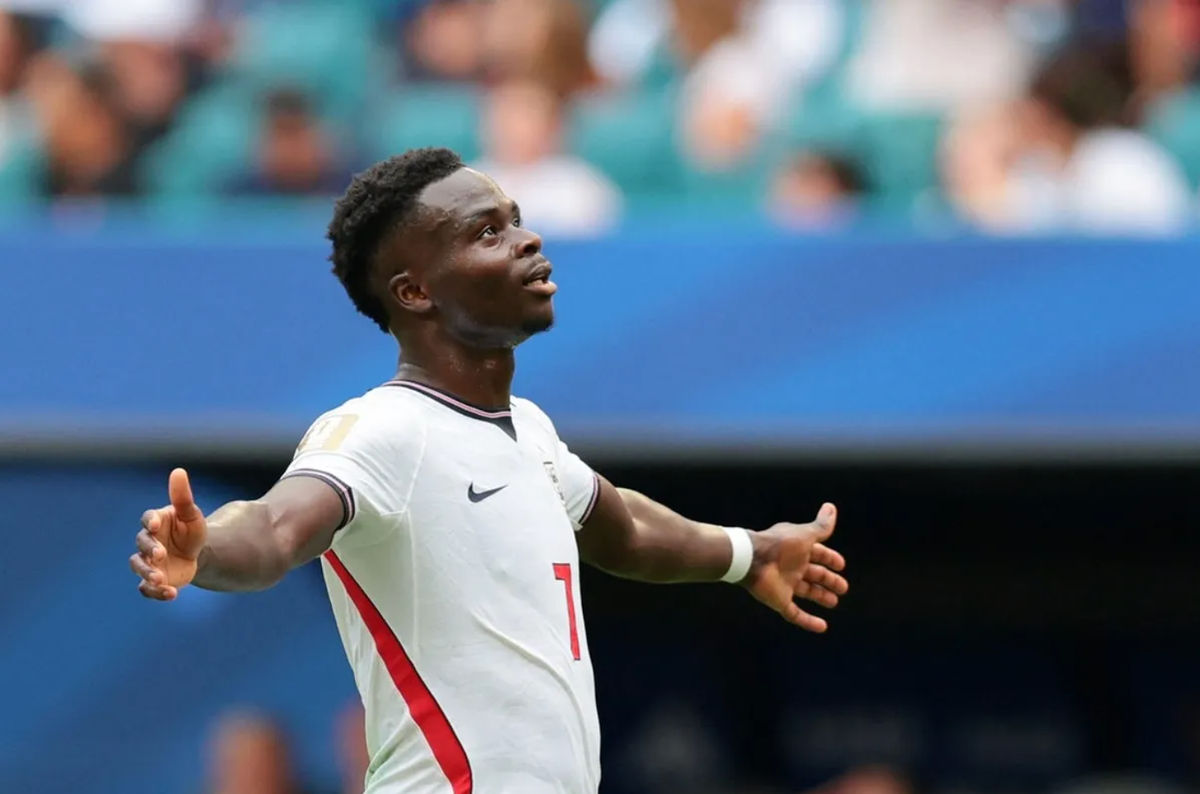 July 18, 2026; Miami Gardens, Florida, U.S.; England’s Bukayo Saka celebrates scoring their third goal. Mandatory Credit: Sam Navarro-Imagn Images
 Here’s an (entirely too) early guess at which nations may be most likely to challenge Spain four years from now.
Portugal: Another talented 2030 co-host that may play much more freely now that the Cristiano Ronaldo World Cup era is officially over following their 2026 exit in the round of 16.
England: Despite a brutal semifinal defeat to Argentina, the Three Lions are another promising squad whose talent skews younger. And Harry Kane is still likely to be a very good center forward at age 36.
France: As good as the extended managerial tenure of Didier Deschamps was, it does feel like it’s time for a change of voice, be it the expected Zinedine Zidane or a more surprising hire.
Morocco: Don’t forget the North African co-hosts, who have now gone to the last eight in consecutive tournaments and were doomed by some key injuries in their 2-0 quarterfinal defeat to France on July 9.
Brazil: This will be Vinicius Junior’s team now with Neymar out of the picture. He looked ready for that in 2026, even if his team suffered a disappointing round of 16 exit to Norway.
