
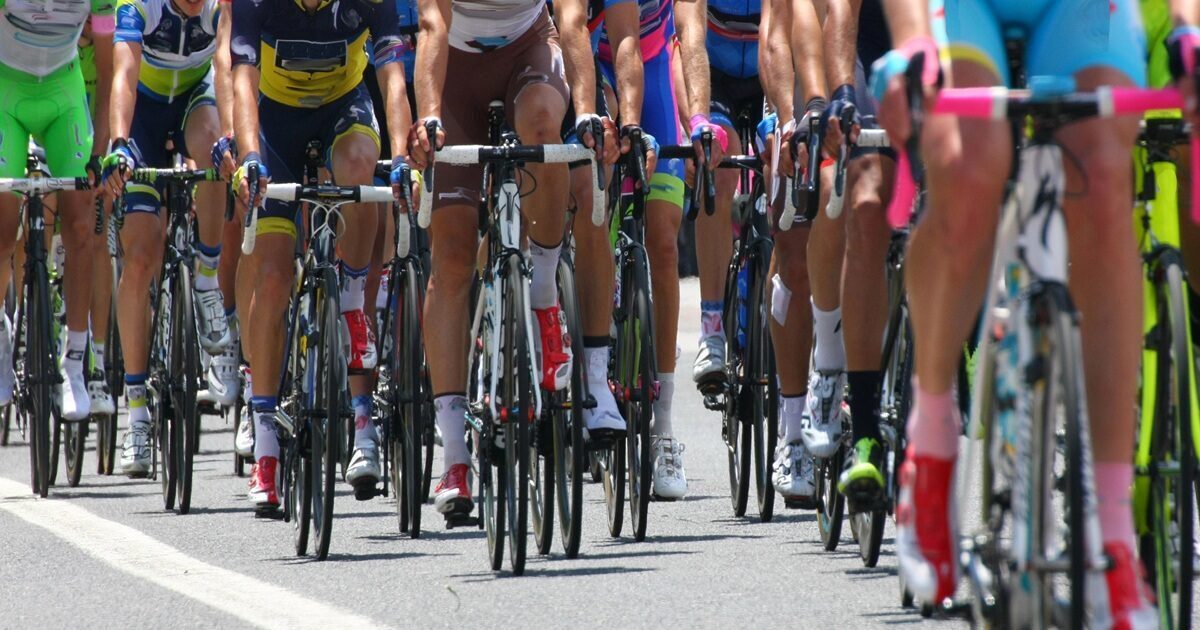
Cycling races can look simple from the outside: riders get on their bikes and race to the finish line. However, professional road cycling has a detailed set of rules covering everything from race starts and team tactics to time limits, penalties and the famous coloured jerseys.
The rules exist to make competition fair, protect riders and ensure races are decided by performance rather than dangerous tactics or unfair advantages.
Road cycling is governed internationally by the Union Cycliste Internationale (UCI), although individual competitions can introduce additional regulations within the UCI framework.
Whether you are watching a Grand Tour, a one-day classic or a local road race, understanding the basic cycling rules makes the tactics and drama much easier to follow.
How Do Cycling Races Work?
Professional road cycling races are usually divided into two main formats: one-day races and stage races.
A one-day race, known as a classic or single-day event, is decided by the rider who crosses the finish line first after completing the full distance.
Stage races are made up of several individual races, with the overall winner determined by the lowest combined time across all stages. The best-known stage races are the Tour de France, Giro d’Italia and Vuelta a España.
A rider can win individual stages without claiming overall victory. For instance, a sprinter may collect multiple wins on flat stages but lose significant time in the mountains, leaving them unable to compete for the general classification title.
How Does a Cycling Race Start?
Most road races begin with a controlled start, known as the neutralised section.
During this period, riders follow the race director’s vehicle while officials ensure the group forms safely. Riders cannot gain a competitive advantage during the neutralised start, and the official race start is only given once the organisers release the riders.
After the official start, riders are free to attack, form groups and begin racing tactics.
In time trials, the format is different. Riders start individually or in small groups at fixed intervals and race against the clock rather than directly against other riders.
How Is the Winner Decided?
In a standard road race, the winner is the first rider to cross the finish line.
For stage races, the overall winner is the rider with the lowest accumulated time after all stages have been completed.
| Competition type | How the winner is decided | Example |
|---|---|---|
| One-day road race | First rider across the finish line | Classic races |
| Stage race | Lowest total time across all stages | Grand Tours |
| Individual time trial | Fastest time over the course | Solo race against the clock |
| Team time trial | Fastest team time under event rules | Team-based racing |
Officials record finishing times using electronic timing systems, photo finishes and video reviews when necessary.
What Are the Different Cycling Jerseys?
Stage races use coloured jerseys to identify leaders in different categories.
The jerseys are not simply awards for winning stages. They represent success in specific areas of the competition.
The exact jerseys vary between events, but the main categories are usually:
| Jersey | Competition | What it rewards |
|---|---|---|
| General classification jersey | Overall race leader | Lowest accumulated time |
| Points jersey | Sprint competition | Points gained at finishes and intermediate sprints |
| Mountain jersey | Climbing competition | Points earned on classified climbs |
| Young rider jersey | Best eligible young rider | Highest placed rider within the age limit |
The rider wearing the general classification jersey changes whenever another rider has a faster overall time.
For example, a rider who wins a mountain stage may take the stage victory, but another rider can still keep the overall lead.
How Does Drafting Work in Cycling?
Drafting is one of the most important tactical elements in road cycling.
A rider following closely behind another rider uses less energy because the leading rider reduces air resistance. This allows teams to protect their leaders and control the pace of a race.
Drafting is legal in road cycling and is a fundamental part of team tactics.
Teams often create a pace line, where riders take turns at the front before moving backwards to recover. This allows the group to maintain speed while reducing fatigue.
Image Embed: Diagram showing how drafting reduces wind resistance in a cycling group
What Actions Are Illegal in Cycling?
While tactics are encouraged, riders must follow safety and sporting rules.
Common offences include:
- dangerous riding
- deliberately obstructing another rider
- holding onto vehicles for an advantage
- accepting illegal assistance
- taking shortcuts
- receiving food or equipment outside permitted areas
- pushing another rider
Some contact between riders are unavoidable, especially in sprint finishes, but intentional dangerous behaviour can lead to penalties or disqualification.
How Do Cycling Time Limits Work?
Stage races often include a time limit, sometimes called the elimination time or finishing cut-off.
The time limit determines how far behind the stage winner riders can finish and remain in the competition.
The limit depends on factors such as:
- stage difficulty
- distance
- average speed
- race conditions
Mountain stages usually allow a larger time gap because climbing requires more effort and naturally creates bigger differences between riders.
A rider who finishes outside the permitted limit can be removed from the race unless officials apply an exception.
Organisers may consider factors such as weather, crashes or unusual circumstances when making decisions.
How Are Penalties Decided?
Race officials, known as commissaires, apply cycling penalties.
Commissaires monitor racing behaviour, review incidents and apply sanctions based on the seriousness of an offence.
Penalties can include:
- time penalties
- fines
- loss of points
- relegation in finishing order
- disqualification
A relegation means a rider keeps their result but is moved down the classification. This is common when a sprinter performs an illegal manoeuvre at the finish.
Officials can use video evidence, race radio information and reports from other officials before making decisions.
How Do Sprint Finishes Work?
Sprint finishes are among the most exciting moments in cycling, but they are also closely regulated.
Riders are allowed to compete aggressively for position, but they cannot deliberately endanger others.
Illegal sprinting actions can include:
- changing direction suddenly into another rider
- blocking another rider’s path
- using dangerous movements to gain an advantage
Officials review sprint incidents after the finish and can adjust results if necessary.
How Do Teams Work Together in Cycling?
Although one rider usually wins, road cycling is a team sport.
Teams contain riders with different roles, including:
- team leaders competing for overall victory
- domestiques supporting leaders by setting pace or providing equipment
- sprinters targeting flat finishes
- climbers attacking mountain stages
Riders may sacrifice their own chances to help a teammate. This is legal and one of the key tactical features of professional cycling.
What Equipment Rules Do Cyclists Have to Follow?
The UCI sets regulations covering equipment, including bicycles and clothing, as well as safety requirements.
Bikes must meet technical standards relating to design, dimensions and safety.
Equipment rules are designed to prevent teams from gaining unfair technological advantages while still allowing innovation.
Officials check bikes used in road races, and equipment that does not meet regulations can be rejected.
What Happens After Crashes?
Crashes are common in road cycling, particularly in large groups.
Race rules include specific protections for riders involved in incidents. In some circumstances, riders can receive time protection if they crash or experience a mechanical problem near the finish.
However, these protections depend on the competition regulations and do not automatically apply in every situation.
A rider must still finish the race and meet the event’s requirements.
Are Cycling Rules the Same in Every Competition?
The basic principles of cycling are consistent worldwide, but individual events can have different regulations.
Differences may include:
- time limits
- jersey classifications
- sprint scoring systems
- team sizes
- technical requirements
- age categories
Professional men’s and women’s races are both governed by UCI rules, although race formats and regulations can differ between events.
Amateur races may also use modified rules depending on the organiser and governing body.
Frequently Misunderstood Cycling Rules
Why Do Riders Slow Down Before the Finish?
A rider slowing down does not always mean they are losing.
Teams often control the pace strategically, allowing riders to conserve energy before attacks or sprint finishes.
Does the First Rider over Every Climb Win Something?
No. Riders only earn climbing points on officially classified climbs.
Can Riders Change Bikes During a Race?
Yes. Riders can receive replacement bikes or wheels when permitted, usually from team vehicles or support areas.
Does Winning Stages Guarantee the Overall Victory?
No. The general classification depends on total time across the entire race.
A rider can win multiple stages but still finish behind another rider overall.
Why Understanding Cycling Rules Matters
Cycling rules shape the strategy behind every race.
The winner is not always the strongest rider on a single day. Success depends on managing time, working with teammates, choosing the right moments to attack and avoiding costly mistakes.
From the coloured jerseys to time limits and sprint decisions, every rule influences how races unfold.
Once the basics are clear, road cycling becomes easier to understand and far more rewarding to watch.
