
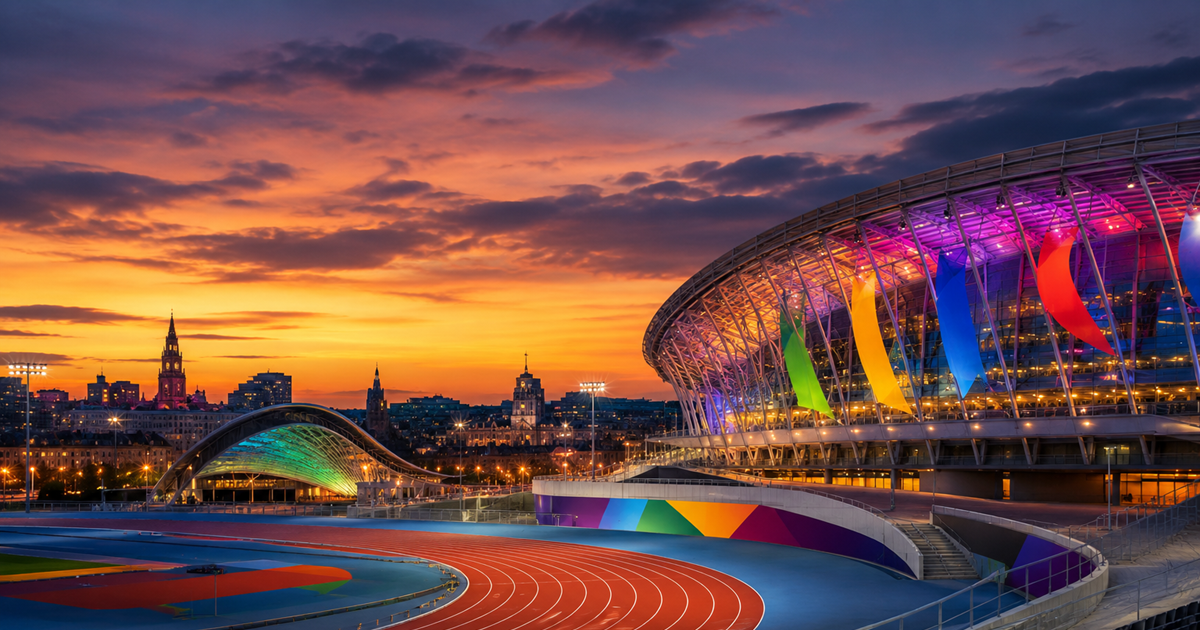
Australia ended the Glasgow 2026 Commonwealth Games at the top of the medal table after collecting 70 golds and 170 medals across the compact 10-sport programme.
England finished a clear second with 29 gold medals, while Canada took third place. India edged hosts Scotland for fourth after the two nations finished level on 13 golds, with India’s superior silver-medal total separating them in the standings.
Australia’s final haul of 70 gold, 44 silver and 56 bronze medals underlined the depth of a team that led the standings from the opening weekend. Their swimmers and Para swimmers provided the foundation before further success followed in athletics, track cycling, gymnastics, bowls, basketball and boxing.
The final day also produced a significant result in netball. New Zealand defeated Jamaica 56-48 to win their first Commonwealth title in the sport since 2010. Australia recovered from their shock semi-final defeat to beat England 68-50 in the bronze-medal match.
Australia Dominate the Final Medal Table
Australia’s 70 gold medals surpassed the 67 they won at Birmingham 2022, although the reduced Glasgow programme meant their overall total of 170 was nine fewer than four years earlier.
The Australians finished 41 gold medals ahead of England. Their 170-medal total was also 60 clear of England’s 110, reflecting sustained success across almost every sport included in Glasgow.
Swimming and Para swimming delivered 37 Australian gold medals and 76 medals overall. Lani Pallister, Sam Short, Mollie O’Callaghan, Meg Harris and Flynn Southam were among the leading contributors during a dominant campaign at Tollcross International Swimming Centre.
Australia continued to build their lead after the swimming programme ended. Their athletics team collected 34 medals, including 12 golds, while a strong finish in track cycling and bowls took the nation beyond its Birmingham gold-medal total.
World in Sport previously reported on Australia’s commanding lead after day eight, when the team had already reached 55 gold medals.
| Position | Nation | Gold | Silver | Bronze | Total |
|---|---|---|---|---|---|
| 1 | Australia | 70 | 44 | 56 | 170 |
| 2 | England | 29 | 45 | 36 | 110 |
| 3 | Canada | 19 | 20 | 23 | 62 |
| 4 | India | 13 | 17 | 9 | 39 |
| 5 | Scotland | 13 | 9 | 17 | 39 |
| 6 | New Zealand | 10 | 14 | 11 | 35 |
| 7 | Nigeria | 10 | 7 | 7 | 24 |
| 8 | Jamaica | 10 | 4 | 5 | 19 |
| 9 | Wales | 9 | 10 | 12 | 31 |
| 10 | Malaysia | 8 | 3 | 5 | 16 |
The standings are ranked by gold medals, followed by silver and then bronze. The complete results can be viewed through the official Glasgow 2026 medal table.
England Secure Second Despite Netball Disappointment
England finished second with 29 gold, 45 silver and 36 bronze medals.
Mark Swan provided the team’s first title in Para powerlifting on the opening day, beginning a campaign that eventually produced 110 medals.
World in Sport covered his success and the early stages of the competition in its Commonwealth Games first-golds report.
Georgia Hunter Bell won the women’s 800m in 1:59.51, while Jazmin Sawyers completed her return from injury by taking the women’s long jump title with 6.93m. Nathan Maguire also delivered an English victory in the men’s T54 1500m.
England achieved further success in boxing, judo, track cycling and bowls. However, their netball team ended the competition without a medal.
The Roses lost 61-54 to New Zealand in the semi-finals before Australia controlled the bronze-medal match. The Diamonds won 68-50, leaving England fourth in the netball tournament for the second successive Commonwealth Games.
India Produce Historic Boxing Performance
India finished fourth after winning 13 gold, 17 silver and nine bronze medals.
Their position was transformed by a remarkable final day of boxing, when Indian fighters won seven of the 14 available gold medals. The team also collected three silver medals and finished top of the sport’s medal table.
No nation had previously won seven boxing titles at one Commonwealth Games. Priya, Arundhati Choudhary, Sachin Siwach and Ankush were among India’s champions during a session that lifted the country above Scotland in the overall standings.
India also achieved historic results in judo. Asmita Dey won the women’s 48kg competition. In comparison, Harsh Singh became the first Indian male judoka to claim a Commonwealth Games title by beating Australia’s Joshua Katz in the men’s 60kg final.
Neeraj Chopra added a silver medal in the men’s javelin, and India’s Para athletes earned seven medals across the programme. Their final total matched Scotland’s 39 medals, but India ranked fourth because their 17 silvers exceeded the hosts’ nine.
Josh Kerr Provides Scotland’s Defining Moment
Scotland finished fifth with 13 gold, nine silver and 17 bronze medals.
The hosts matched the 13 gold medals they won at Birmingham 2022 despite competing in a substantially smaller programme. Their total medal count fell from 51 to 39, but Glasgow still produced memorable home victories across swimming, Para swimming, athletics, gymnastics, cycling and bowls.
Josh Kerr supplied the Games’ defining Scottish performance by winning the men’s mile at Scotstoun Stadium.
The race returned to the Commonwealth programme for the first time since 1966. Kerr remained patient during a tactical contest before moving through the field and winning in 3:54.12. Australia’s Cameron Myers took silver, with Kenya’s Timothy Cheruiyot third.
Kerr’s victory came two weeks after his world-record performance over the same distance and carried added significance on the track where he had competed as a child.
Duncan Scott, Stephen Clegg, Faye Rogers, Angharad Evans, Ben Sandilands and Rueben Ward were also among Scotland’s gold medallists. Their results helped the hosts remain near the leading nations throughout the Games.
New Zealand Return to the Top in Netball
New Zealand brought the sporting programme to a close by beating Jamaica 56-48 in the netball final at The Hydro.
The Silver Ferns had defeated Jamaica 53-48 during the pool stage before overcoming England 61-54 in the semi-finals. Jamaica reached the final after producing one of the competition’s biggest upsets, beating defending champions Australia 46-45.
New Zealand established control of the gold-medal match and resisted Jamaica’s attempt to recover during the second half. Their eight-goal victory secured a third Commonwealth netball title and their first since Delhi 2010.
Jamaica earned silver for the second successive Games. Although the Sunshine Girls were unable to convert their historic semi-final victory into gold, their performances demonstrated the narrowing gap between the leading international teams.
Australia finished third after responding to the end of their run of appearances in every Commonwealth netball final since the sport joined the programme in 1998.
Full match results are available through the World Netball Commonwealth Games hub.
A Compact Games Deliver an Important Test
Glasgow staged the 23rd Commonwealth Games after Victoria withdrew from hosting the event. Organisers responded with a reduced programme centred on 10 sports and four existing venue clusters within an eight-mile corridor.
Around 3,000 athletes from 74 Commonwealth Games Associations competed in 215 medal events between 23 July and 2 August. Six sports incorporated Para competition, with a record 47 Para medal events included.
The smaller programme inevitably limited opportunities for countries whose strongest disciplines were omitted. However, it also produced a busy schedule in which medal events followed quickly across swimming, athletics, cycling, boxing, judo, bowls, gymnastics, weightlifting, basketball and netball.
The World in Sport guide to Glasgow 2026 explains how the revised format differed from Birmingham 2022 and why several traditional Commonwealth sports were not included.
Australia’s dominance remained familiar, but the competition also provided major moments for smaller teams. Jersey, Samoa, Sri Lanka, Fiji, the Bahamas, the British Virgin Islands, Dominica and Grenada all won gold medals.
Attention then turned to the closing ceremony at The Hydro, where Glasgow band Simple Minds were scheduled to headline the final celebration. The ceremony brought an end to a Games developed under unusual circumstances but completed with all 215 medal events decided.
