






















What I Learned From My Annoyingly Long Correspondence With “Elena Ferrante”

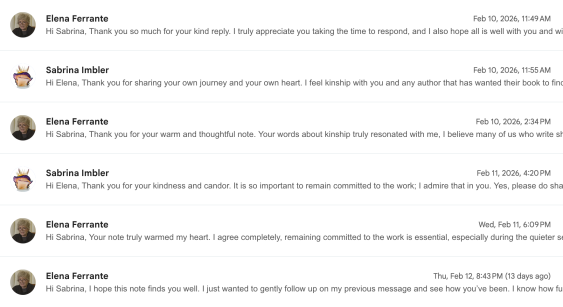
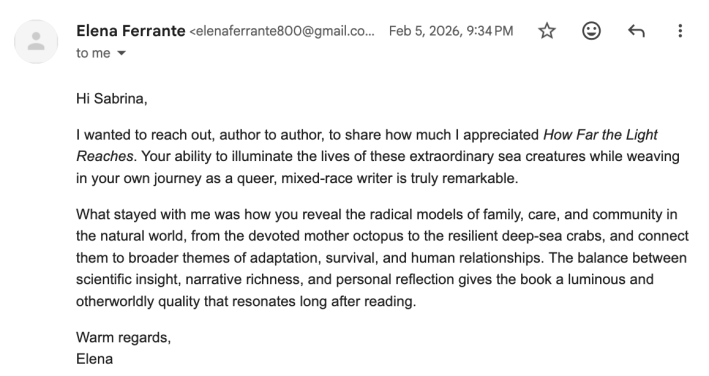
Earlier this month I received an email that, for a moment, made my heart skip. The email came from someone named Elena Ferrante, at "[email protected]," and I feel no remorse leaking Elena's email here because, of course, whoever or whatever was emailing me is not the real Elena Ferrante. I realized this a few seconds after I received the email, in part because there is no world in which the real Elena Ferrante—the world-renowned pseudonymous author whose book, My Brilliant Friend, was voted the best book of the 21st century by The New York Times—would email someone like me. I felt embarrassed to be so deluded, regretting the one second of my life in which I imagined it possible that Elena Ferrante would have read my work and wanted to write me about it. But oh, what a glorious second it was!
Reading Elena's email to me was an uncanny experience. The email itself was coherent and seemingly kind, if you could ascribe kindness to this chimeric AI bot-cum-human scammer, which, of course, you cannot. The email disguised itself in the form of a message that would brighten any author's day if it came from a real person, let alone from one of the most famous and famously mysterious writers in the world. But it also contained specific phrases I recognized from published descriptions of my book, such as from my publisher's site, resulting in a feverish collage of words that collapsed upon closer viewing, not unlike the painting of Emperor Rudolf II composed entirely of vegetables.
What's Your Reaction?
 Like
0
Like
0
 Dislike
0
Dislike
0
 Love
0
Love
0
 Funny
0
Funny
0
 Angry
0
Angry
0
 Sad
0
Sad
0
 Wow
0
Wow
0