
Fantasy football success is about identifying opportunity before everyone else catches on. The New York Giants enter the 2026 season as a pretty fascinating fantasy football team because while Malik Nabers remains the unquestioned centerpiece of the offense, nearly every other significant role remains open for competition. Add in a revamped offensive line still searching for its best combination, and fantasy managers have two critical battles that deserve constant monitoring. Those willing to pay attention could uncover several draft bargains before Week 1 arrives.
New-look Giants
The Giants entered the 2026 offseason knowing incremental improvement would not be enough. After another inconsistent campaign, the organization aggressively reshaped the roster.
The front office made significant investments in the secondary to stabilize the defense. They also simultaneously overhauled the offensive philosophy with new personnel and schematic priorities under center. The goal was to create a more balanced team.
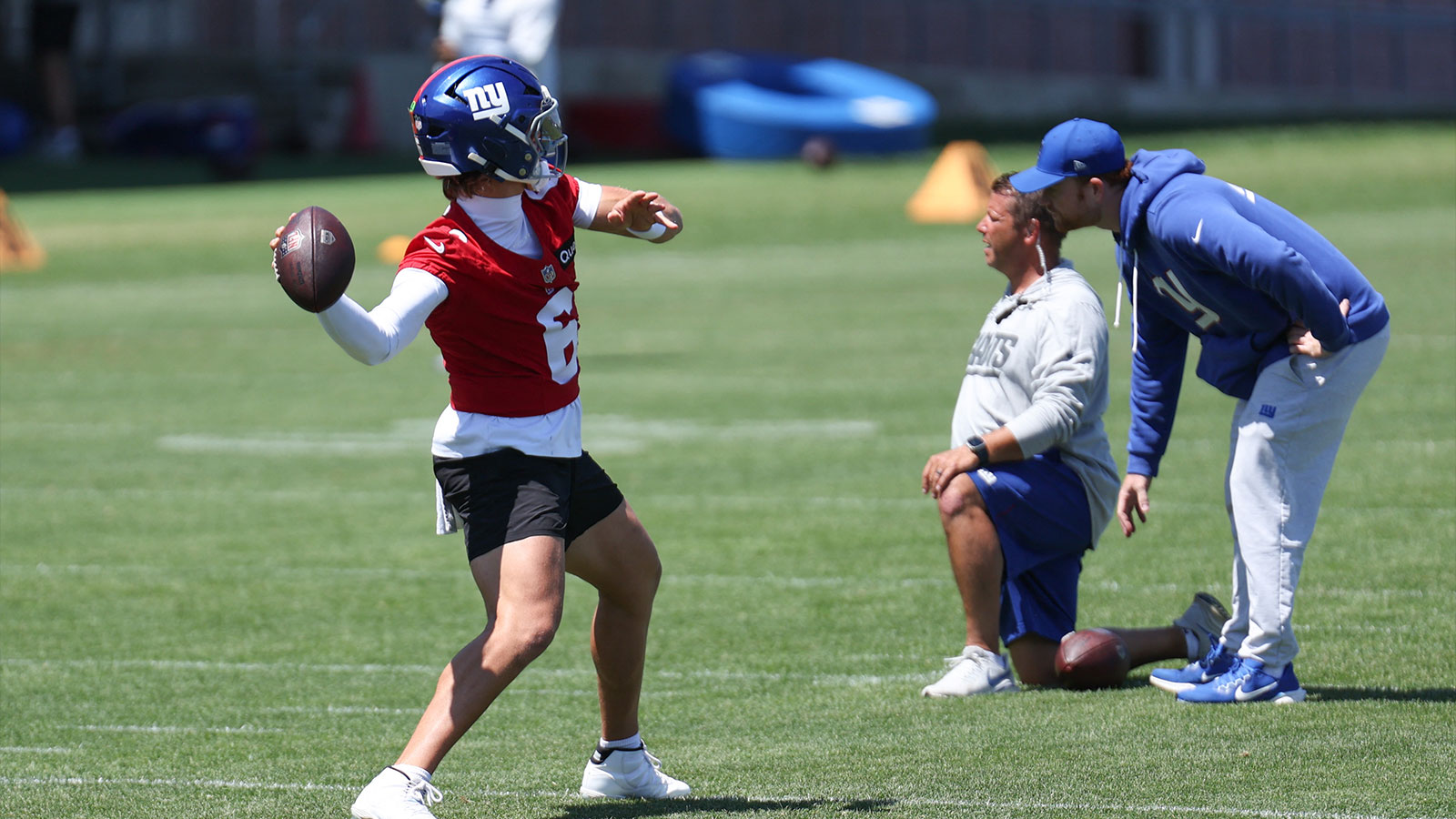
Training camp has reflected that urgency. Practices have been highly competitive, physical, and demanding. Coaches have emphasized fundamentals while evaluating multiple position battles that remain unsettled. Early reports indicate the defense has consistently dictated the pace behind an aggressive pass rush. They have forced the offense to accelerate its installation process during full-team drills.
As expected, quarterback execution continues to improve with each passing practice. However, several offensive positions remain fluid. Offensive line combinations are still being rotated. The coaching staff also continues evaluating which receivers deserve consistent first-team opportunities behind Malik Nabers.
Monitoring these competitions now could provide valuable insight before average draft position adjusts to what eventually unfolds during the regular season.
Behind Malik Nabers
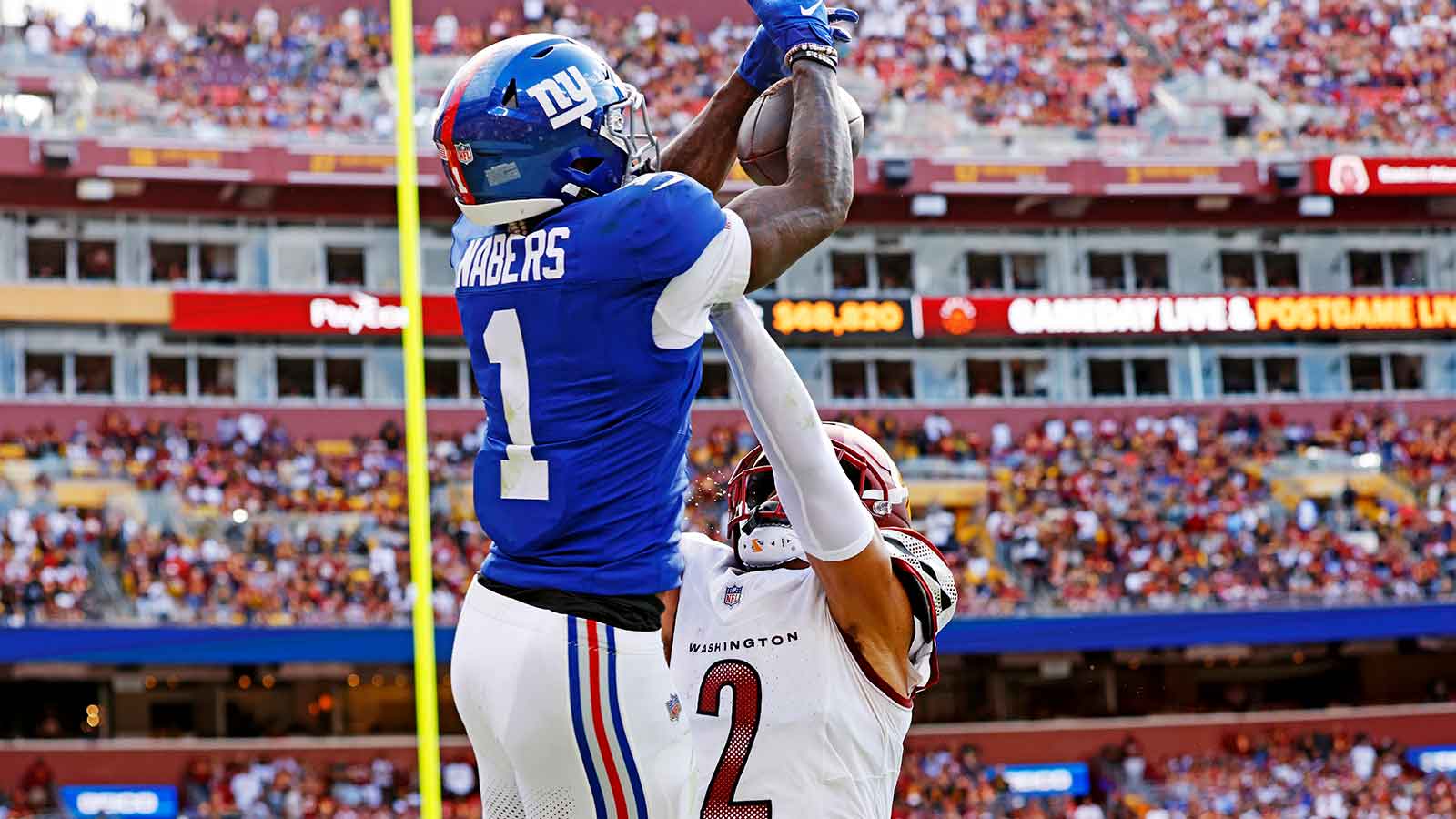
Nabers enters the season as the unquestioned focal point of New York’s passing attack. He projects to command the largest share of targets on the roster. The bigger fantasy football mystery lies behind him.
Who becomes the Giants’ true No. 2 receiver? Darnell Mooney has spent much of camp working with the first-team offense. He has brought veteran speed and polished route-running. Mooney has repeatedly demonstrated an ability to stretch defenses vertically while also creating separation underneath.
Next, Darius Slayton remains firmly in the conversation. His ability to attack defenses down the field continue makes him an attractive option. Slayton has alternated primary perimeter snaps throughout camp. That ensures this competition remains far from settled.
Then there is Calvin Austin III. Operating primarily from the slot, Austin offers a different dimension altogether. His quickness allows him to exploit short and intermediate areas of the field. In PPR fantasy formats, that role carries significant value.
Perhaps the biggest surprise has been Malachi Fields. He has steadily gained momentum during padded practices. Coaches have rewarded his production with increased opportunities. He has begun forcing himself into conversations that appeared unlikely entering camp.
The receiver room becomes even more crowded beyond those names.
Veterans Odell Beckham Jr, JuJu Smith-Schuster, Braxton Berrios, and Jalin Hyatt are all competing for roster spots. Yes, not every player will maintain fantasy relevance. Still, the competition itself influences snap counts and target distribution across the offense.
Offensive line battle
Many teams have long demonstrated how dominant line play elevates skill-position production. The Giants hope to build a similar foundation by establishing consistency along the interior offensive line.
The biggest question centers on right guard. Francis Mauigoa and Aaron Stinnie continue rotating through meaningful first-team opportunities. They bring different strengths. Stinnie offers experience and veteran reliability. Mauigoa provides intriguing physical tools capable of developing into a long-term solution.
Meanwhile, versatility remains another important evaluation point. Evan Neal and Daniel Faalele have both received opportunities across multiple positions. That gives the coaching staff flexibility while continuing to determine the strongest possible five-man unit entering September.
Remember, offensive line chemistry directly affects almost every offensive statistic that matters. Clean interior blocking creates rushing lanes. Strong communication improves pass protection. Consistent movement at the point of attack sustains drives while increasing red-zone efficiency.
Perhaps no player stands to benefit more than Cam Skattebo. Returning after recovering from a late-season leg injury, Skattebo projects to handle a significant workload in 2026. A cohesive interior would allow the Giants to remain committed to the run. Goal-line production also depends heavily on interior blocking.
Shaping fantasy draft season
The Giants possess enough offensive talent to produce several valuable fantasy football contributors. However, identifying the right supporting pieces remains the key challenge entering 2026.
The receiver competition behind Malik Nabers will determine whether Darnell Mooney, Darius Slayton, Calvin Austin III, or emerging contender Malachi Fields becomes the offense’s dependable secondary option.
At the same time, the ongoing battle along the interior offensive line could significantly influence Cam Skattebo’s rushing efficiency. For fantasy football managers, these competitions could become the difference between selecting dependable weekly contributors and overlooking some of the best value available in 2026 drafts.
Fantasy football success is about identifying opportunity before everyone else catches on. The New York Giants enter the 2026 season as a pretty fascinating fantasy football team because while Malik Nabers remains the unquestioned centerpiece of the offense, nearly every other significant role remains open for competition.
