
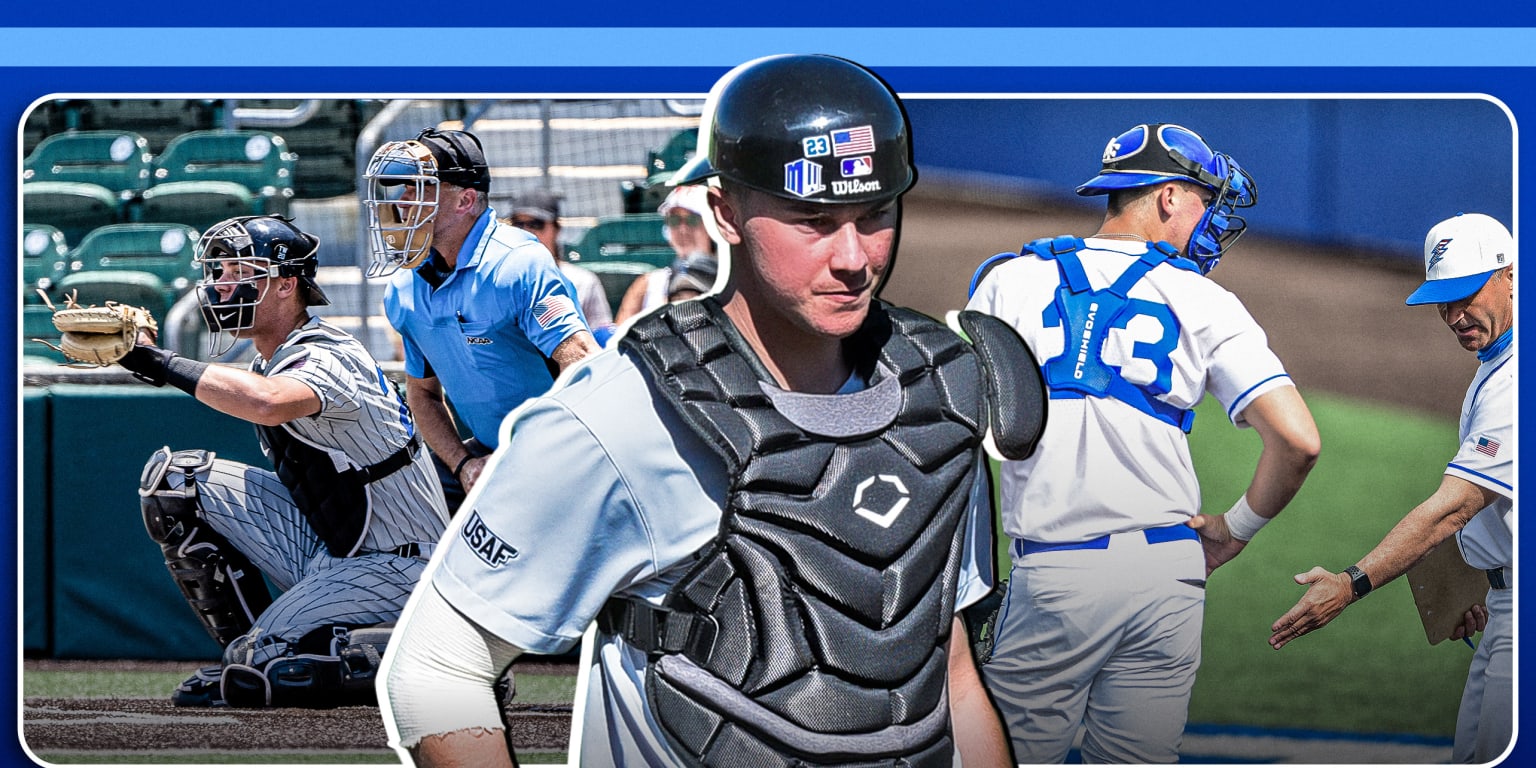
PITTSBURGH — Paul Skenes’ responsibilities at Air Force were unlike any other player in the country. When the Falcons held the lead late, Skenes raced from playing catcher to the bullpen to warm up as the pitcher. It was his job to close out the game on the mound.
“It was pretty superhuman,” said Sammy Kulasingam, Skenes’ teammate at Air Force.
Before Skenes developed into one of baseball’s top starting pitchers for the Pirates, he grew up through the game as a catching prospect. Skenes went to Air Force as a catcher and stayed at the position until his pitching prowess took over.
Despite not catching for five years, Skenes still uses his expertise from behind the dish to dominate opposing batters at the highest level.
“You’re doing the same thing; you’re trying to achieve the same goal,” Skenes told MLB.com. “You’re just doing it from the two opposite ends. I think catching was really good in terms of reading swings and getting a feel for the game. It can only help when you’re pitching.”
Skenes recalls his catching career ending as his name stopped showing up in batting practice groups. At that time, he had just transferred to LSU and was the expected ace on the best college team in the country.
LSU head coach Jay Johnson said the original plan was for Skenes to be a two-way player with the Tigers, mixing in at designated hitter and first base. Skenes led the squad with nine homers in the fall of 2022, though Johnson’s staff realized the wear and tear hitting put on Skenes. With fewer rotations at the plate, Skenes was taking off on the mound.
“We watched him evolve into the best pitcher on the planet by peeling [hitting] back,” Johnson said. “That was what was best for Paul.”
While tackling the already grueling responsibilities of military training at the Air Force Academy, Skenes was tasked with calling pitches behind the plate and on the mound. Former Falcons pitching coach Ryan Forrest said they saw Skenes begin to evolve into a star pitcher and needed to maximize his talents. In his sophomore campaign, Skenes would start on Fridays, DH on Saturdays and catch on Sundays while catching one midweek game too.
By his sophomore season, Skenes had grown from the 5-foot-11 recruit to a 6-foot-6 behemoth. In a game against Nevada, a Wolf Pack batter hit a no-doubt home run and watched it a little too long for Skenes’ liking. The catcher towered over home plate, waiting for the batter to make it back so he could give him a piece of his mind.
Doyle Gehring, a pitcher on the Air Force staff, remembers Skenes giving a signature fist pump behind the plate when he needed the pitcher to make a big pitch. During mound visits, Skenes tailored his encouragement to the pitcher’s needs, telling Gehring to up the intensity.
Former Air Force head coach Mike Kazlausky said Skenes had some of the softest hands he’s seen at the position. Forrest felt his specialty was “dunking” pitches at the top of the zone to frame for more strikes. Then, of course, there was the rocket-launcher arm.
“Paul’s the field general,” Kazlausky said. “He was going to be a first-round pick as a catcher.”
When his catching days ended with LSU, Skenes used his mind to his advantage. Amid a dominant season with the Tigers, Skenes posted a rare stretch of hiccups, allowing three-plus runs in three straight games. In his next start against Auburn, then-pitching coach Wes Johnson suggested flipping his pitch usage to throw hitters off. LSU catcher Alex Milazzo said while it would be difficult for most pitchers to pitch backwards, Skenes possessed a deep understanding of his entire arsenal, and he wasn’t fazed.
Milazzo believes Skenes is hyperaware of his pitch movements because of his catching background, recognizing how difficult he can be to hit when tunneled correctly. The catcher said he rarely needed mound visits with Skenes on the mound, as the ace understood how to pace the game. LSU assistant Jamie Tutko thinks Skenes is more athletic than most pitchers with varying arm angles from his catching days.
“He’s using everything to create an advantage,” Johnson said. “His catching background absolutely helped him understand hitters better, their weaknesses, how to make life difficult on them.”
The itch remained to catch while at LSU. Milazzo said Skenes wouldn’t catch bullpens, but he did some receiving work in the cage one day. Everyone held their breath, fearing Skenes would be injured.
As Forrest puts it, the writing was on the wall that Skenes’ catching career would one day be surpassed by his pitching talents. CJ Gillman, who originally recruited Skenes to Air Force, still held out hope he would catch at LSU, just because he enjoyed watching him play the position.
Many around Skenes still believe he’s capable of being a big league catcher. Skenes said he wouldn’t go through the Air Force regimen of catching and pitching within the same games, knowing it was much easier four days a week than it would be with an MLB schedule.
Though if you put Skenes behind the dish on an MLB diamond, he’d still be confident in his abilities.
“I could catch,” Skenes said. “I don’t know if the hitting would have caught up, but [catching] was what I wanted to do all throughout high school and college until I got to LSU.”
