
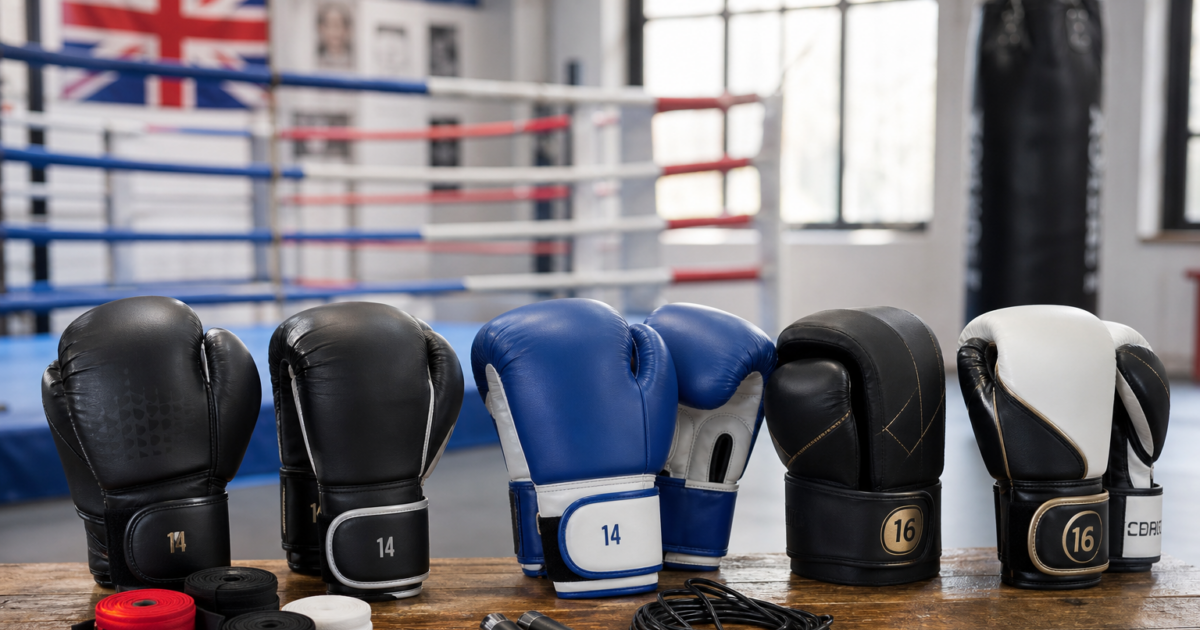
A buying guide for beginner boxing gloves compares seven UK options by price, training use and weight, recommending 14oz as the best starting point for most adults. It explains when 16oz makes sense, why hand wraps matter, and how glove design affects bag work, pad sessions and sparring.
The guide highlights RDX, Everlast, Venum, Adidas, Rival and Hayabusa models, from budget to premium. It also covers glove care, typical prices, and the main features beginners should look for, such as secure wrist support, attached thumbs and even knuckle padding.
Buying your first pair of boxing gloves should feel exciting. Instead, many beginners find themselves facing dozens of models, unfamiliar glove weights and prices ranging from less than £20 to well over £150.
Some gloves are designed for bags. Others suit sparring, fitness classes or general training. A glove that works well for one session may be completely wrong for another.
For most adult beginners, a 14oz Velcro training glove offers the best balance of protection, comfort and versatility. A 16oz glove may make more sense if you are heavier, prefer additional padding or expect to begin sparring once your coach approves.
You do not need professional fight gloves or an expensive handmade pair. You need comfortable gloves that support your wrists, protect your knuckles and suit the sessions you attend.
Readers who are completely new to the sport can also begin with our guide to boxing rules, scoring, rounds and fouls.
Prices in this guide were checked on 21 July 2026. Retail prices, colours and available sizes can change.
The best beginner boxing gloves at a glance
| Glove | Best for | Typical UK price |
|---|---|---|
| RDX F6 Kara | Best overall value | Around £30 |
| Everlast Elite 2 | Affordable all-round training | £25–£35 |
| Venum Contender 1.5 | Regular beginner sessions | Around £45 |
| Adidas Speed Tilt 150 | Fitness classes and pad work | Around £38 |
| Rival RB60C | Dedicated heavy-bag training | Around £40 |
| Venum Challenger 3.0 | Best step-up training glove | Around £55 |
| Hayabusa S4 | Premium beginner protection | Around £70 |
How we chose these beginner boxing gloves
This shortlist considers current UK pricing, available glove weights, closure systems, manufacturer specifications and the training each model is designed to handle.
It does not assume that every glove suits every boxer. Hand shape, wrist size and personal comfort matter, while boxing gyms often set their own rules for sparring equipment.
Whenever possible, try gloves on while wearing hand wraps. A pair may feel comfortable on a bare hand but become too tight once your hands are properly wrapped.
RDX F6 Kara offers the best overall value
The RDX F6 Kara is a practical first choice for beginners who want a recognisable training glove without spending heavily.
It uses a synthetic Maya Hide outer material, layered padding and a wide wrist closure. That combination makes it suitable for pad rounds, heavy-bag sessions and general boxing classes.
The glove normally costs around £29.99, placing it at the lower end of the market without dropping into toy-like fitness equipment. It is also available in common training weights, including 12oz, 14oz and 16oz.
The F6 can feel relatively firm when new, so give the padding time to settle rather than attacking the heavy bag at full power during the first session.
For most adults, the 14oz version provides the best all-round starting point. Heavier beginners may prefer 16oz.
You can view the current sizes and specifications for the RDX F6 Kara Boxing Training Gloves.
Best for: Beginners seeking a versatile first glove for around £30.
Everlast Elite 2 keeps the entry price low
The Everlast Elite 2 is widely available in the UK and regularly appears at prices between £25 and £35.
It comes in several weights, including 10oz, 12oz, 14oz and 16oz, which makes it easier to find an option that suits your size and training plan.
The glove has a full wrist strap and a ventilated palm section. It works best as an affordable training option for classes, pads and moderate bag work.
Regular heavy hitters may eventually want denser padding or a more durable outer material. However, the Elite 2 makes sense for someone attending one or two beginner sessions each week.
Avoid choosing the lightest available glove simply because it feels faster. A 14oz Elite 2 will usually serve a new adult boxer better than the 10oz version.
Best for: New boxers who want an affordable glove from an established boxing brand.
Venum Contender 1.5 suits regular beginner training
The Venum Contender 1.5 sits between low-cost fitness gloves and more expensive training equipment.
Its semi-leather construction, multi-density injected foam and large hook-and-loop fastening give it a secure, straightforward design. It also has an attached thumb, which should remain a standard requirement for proper boxing training gloves.
At around £44.99, the Contender costs more than entry-level Everlast and RDX options. However, the extra spend may make sense for beginners who already know they will train several times a week.
The glove has a compact feel compared with some broader beginner models. Boxers with large hands should therefore try it with wraps or check the retailer’s return policy before buying.
Choose 14oz for regular bag, pad and technical sessions. Ask your coach before buying 16oz gloves specifically for sparring.
Best for: Beginners training regularly who want a more refined fit.
Adidas Speed Tilt 150 works well for fitness and pads
The Adidas Speed Tilt 150 is a lightweight training glove built around the brand’s angled Tilt design.
It is particularly well suited to pad work, boxing fitness classes and technical drills. Beginners who value a lighter, less bulky glove may find it more comfortable than a traditional 16oz training model.
However, many versions are sold in lighter weights such as 10oz and 12oz. That limits its usefulness as a single glove for every type of training.
It can make a good first purchase for non-contact boxercise or fitness sessions. It is less suitable for adult sparring, and beginners doing frequent heavy-bag work may prefer a 14oz glove with more substantial padding.
Best for: Fitness boxing, pad sessions and non-contact classes.
Rival RB60C is a strong dedicated bag glove
The Rival RB60C Workout Compact 2.0 is different from most gloves on this list because it is designed specifically for bag work.
It uses layered foam, a synthetic leather outer, a breathable mesh palm and Rival’s ergonomic wrist strap. Its compact construction allows quick combinations and clear feedback when punches land.
Rival sizes this glove by hand and body measurements rather than using the familiar 12oz, 14oz and 16oz system. Check the company’s size chart carefully before ordering.
The RB60C should not become your sparring glove. Bag gloves often have a firmer striking surface and are built to protect the puncher against equipment rather than protect a training partner.
It is an excellent choice once you know most of your sessions will involve heavy bags. Beginners looking for one glove to cover every class should choose a standard training glove instead.
Best for: Beginners mainly training on punch bags.
Venum Challenger 3.0 is the best step-up option
The Venum Challenger 3.0 costs around £54.99 at its regular UK price, although certain colours often appear in sales.
It uses triple-density foam, a large Velcro fastening and a breathable neoprene interior. Those features make it a sensible upgrade for beginners moving beyond occasional fitness classes and into regular technical training.
Unlike the lighter Adidas option, the Challenger 3.0 is available from 8oz through to 16oz. That gives buyers more flexibility, although the right weight still depends on the session rather than personal preference alone.
The 14oz model is the best general choice for most adults. The 16oz version may suit supervised sparring, but your coach should inspect and approve any gloves before you use them against a partner.
Best for: Beginners who expect to train several times each week.
Hayabusa S4 delivers premium beginner support
The Hayabusa S4 is specifically positioned as a beginner and fitness glove.
It has splinted wrist padding, an attached thumb, an ergonomic grip bar and a mesh palm. The wrist design feels more structured than many cheaper single-strap gloves, which can benefit beginners still learning to keep their hands and wrists aligned.
At around £70, the S4 is one of the more expensive options in this guide. It will not transform poor technique, and beginners should not assume that a higher price removes the need for hand wraps or proper coaching.
However, the build and wrist support make it a convincing long-term option for someone committed to regular classes, bag work and pad training.
The Hayabusa S4 Boxing Gloves are available in several training weights. The 14oz model should suit most general sessions, while 16oz may be appropriate where a coach requires a heavier glove.
Best for: Beginners prepared to pay more for structured wrist support.
Should beginners choose 12oz, 14oz or 16oz gloves?
Boxing glove weight refers to the overall weight of the glove rather than a conventional hand-size measurement.
A heavier glove usually contains more padding, although shape, materials and padding density vary between manufacturers.
12oz boxing gloves
A 12oz glove feels quicker and less tiring. It may suit smaller adults, pad work, fitness boxing and controlled bag sessions.
However, it is rarely the best one-pair solution for an adult who expects to move into sparring.
14oz boxing gloves
A 14oz glove offers the best balance for many adult beginners.
It has enough padding for general bag work, pad sessions and technical drills without feeling as heavy as a 16oz glove. When someone asks which weight to buy for their first boxing class, 14oz is usually the most practical starting point.
16oz boxing gloves
A 16oz glove provides more padding and is commonly requested by boxing gyms for adult sparring.
That does not mean every 16oz glove is automatically suitable for sparring. Padding condition and construction also matter. Always follow your coach’s instructions and never use a dedicated bag glove against another boxer.
Glove weights used in amateur competition follow separate rules. Your competition equipment will normally be approved or supplied for the event rather than taken from your everyday gym bag.
For more information about boxing divisions, visit our guide to boxing weight classes.
What should beginners look for in boxing gloves?
A good first glove does not need complicated technology. It needs to perform a few important jobs reliably.
The wrist fastening should close securely without cutting into your forearm. Your hand should remain stable inside the glove when you make a fist.
The knuckle padding should feel even. Avoid gloves with obvious flat spots, gaps or padding that shifts when pressed.
Choose an attached-thumb design. Loose or open-thumb fitness mitts are not suitable for normal boxing training or sparring.
Synthetic leather is acceptable for beginners and keeps the price down. Genuine leather may last longer when maintained properly, but it is not essential for your first pair.
Ventilated palms and moisture-managing linings improve comfort. However, no glove will remain fresh when left zipped inside a damp gym bag.
Do beginners need separate sparring gloves?
You do not need sparring gloves when you first walk into a boxing gym.
Most beginners spend their early sessions learning stance, guard, movement and basic punches. General training gloves are sufficient for bags, pads and non-contact partner drills.
Once your coach allows you to spar, ask which gloves the club expects you to use. Some gyms require 16oz gloves, while others consider the boxer’s weight, experience and the glove’s padding.
Never use Rival RB60C gloves, small bag mitts or worn-out training gloves for sparring. A dedicated sparring pair should have suitable padding and remain in good condition.
The World in Sport boxing section also contains fight guides, rules explainers and features for readers learning more about the sport.
How much should beginner boxing gloves cost?
Most beginners should aim to spend between £30 and £70.
Gloves under £20 can work for occasional non-contact fitness sessions, but they often use thinner padding, weaker wrist straps and less durable linings. Regular bag training can expose those weaknesses quickly.
The £30 to £50 range contains several capable first gloves, including the RDX F6, Everlast Elite 2 and Venum Contender.
Spending between £50 and £70 can bring better padding construction, stronger wrist support or a more comfortable lining. The Venum Challenger 3.0 and Hayabusa S4 sit in this range.
There is little reason for a complete beginner to spend £150 or more before understanding how often they will train and what style of glove they prefer.
Do you need hand wraps under boxing gloves?
Yes. Beginners should wear hand wraps inside their gloves.
Wraps support the hand and wrist while also absorbing sweat before it reaches the glove lining. They cannot correct poor punching technique, but they form an important part of normal boxing equipment.
Traditional 4.5m wraps provide enough material for most adult hands. Quick wraps are easier to put on and may suit fitness classes, although they offer less flexibility than traditional wrapping.
Try your gloves on while wearing the wraps you intend to use. Your fingers should reach the end of the hand compartment without feeling crushed or numb.
How to make boxing gloves last longer
Open the wrist straps immediately after training and remove the gloves from your bag.
Let them dry naturally in a ventilated area. Avoid placing them directly on a radiator, as excessive heat can damage the outer material, lining and foam.
Wipe the inside with a clean, lightly dampened cloth and allow it to dry. Glove deodorisers can help absorb moisture between sessions.
Never put boxing gloves in a washing machine. Water and movement can damage the padding and change the glove’s shape.
Replace your gloves when the knuckle padding becomes flat, the outer material splits or the wrist fastening stops holding securely.
Frequently asked questions
What boxing glove weight should a beginner buy?
Most adult beginners should start with 14oz training gloves. Choose 16oz when your coach recommends them for sparring or when you prefer additional padding.
Can beginners use 10oz boxing gloves?
A 10oz glove may suit light pad work or certain fitness sessions, but it provides less padding and is not the best all-round choice for most adult beginners.
Can one pair cover bag work and sparring?
A general training glove can cover bags and pads. However, regular boxers should eventually keep separate gloves for bag work and sparring because heavy-bag sessions gradually compress the padding.
Are expensive boxing gloves worth buying?
They can be worth buying once you train regularly and understand your preferences. A beginner can still get a dependable first pair for £30 to £70.
Should boxing gloves feel tight?
They should feel snug with wraps on, but they should not crush your fingers, restrict circulation or cause numbness.
Which beginner boxing gloves should you buy?
The RDX F6 Kara offers the strongest overall value for beginners who want a versatile glove for around £30.
The Everlast Elite 2 provides another affordable option, particularly for fitness classes and lighter weekly training. The Venum Contender 1.5 gives regular beginners a more refined step up without moving into premium pricing.
Choose the Rival RB60C only when you specifically want a dedicated heavy-bag glove. For a longer-term training option, the Venum Challenger 3.0 offers a strong mix of available weights, padding and ventilation.
The Hayabusa S4 is the premium pick. Its structured wrist support makes sense for a committed beginner, although the higher price will not replace sound coaching and properly wrapped hands.
Whatever model you choose, buy the right weight for your sessions, wear hand wraps and ask your coach before entering sparring.
More beginner-friendly explainers are available through the World in Sport Sports Guides hub.
