
After failing to qualify for Europe last season, serious questions were asked about the lack of experience at Chelsea.
The Blues ended the 2025-26 season in 10th place, which is nowhere near the standards of a club of this magnitude.
A major part of that was to do with the club’s ludicrous strategy of bringing in players under 25.
However, it seems that this season the club has finally realised that, to become a better side, it needs more experience to raise the team’s standards.
Bringing in players like Danny Welbeck and Jordan Henderson certainly improves the squad’s leadership, but is it enough? Some may argue not.
In 2025-26, Chelsea’s forward line consisted of Cole Palmer, João Pedro, Pedro Neto, Liam Delap, Estevao Willian, Alejandro Garnacho, and Jamie Gutters.
Between the seven of them, they contributed just 39 goals and 25 assists in all competitions.
Though this may look good on paper, in reality, it is nowhere near the standards of a big six club, let alone a team that wants to fight for titles.
Alonso Given the Keys?
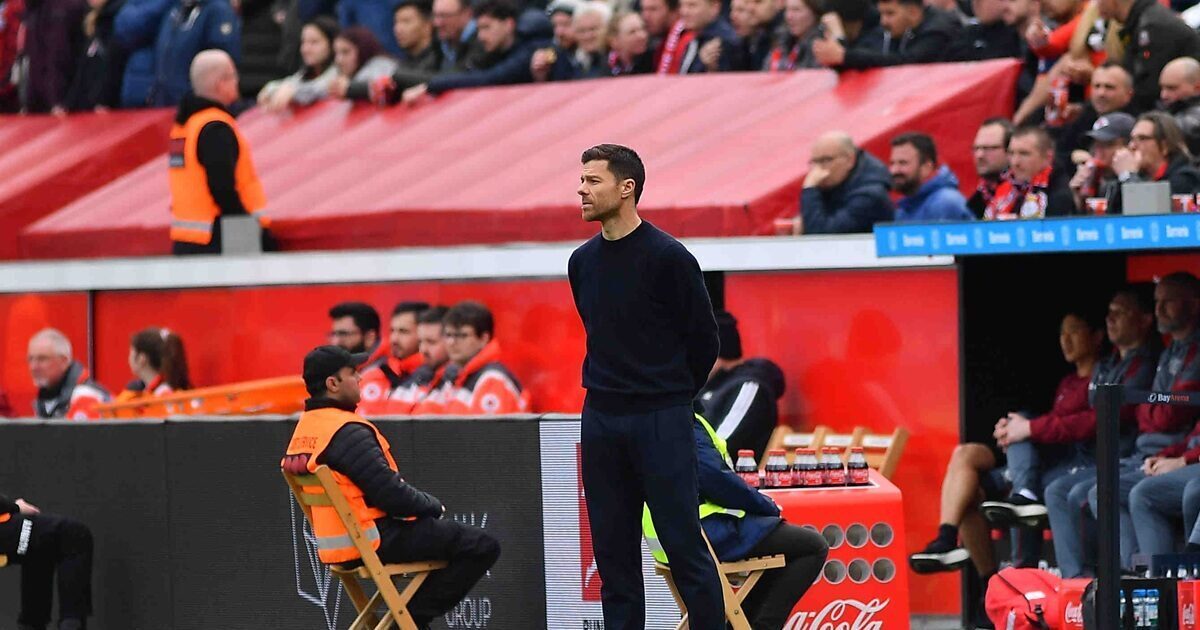
A major reason for the change in strategy in the transfer market is that Alonso now influences which players the club should bring in.
This was rarely the case for Thomas Tuchel, Mauricio Pochettino, and Enzo Maresca, who clearly felt that they weren’t given the power to make their own decisions.
For any team that wants to succeed at the highest level, you need to give the manager the keys to succeed. And that starts with bringing in the right leaders to set those standards.
Not only that, but the Spaniard will also give Chelsea a clear philosophy of play, something that was lost after the departure of Maresca and was lacking under Liam Rosenior.
Maresca prioritised control, while Rosenior embraced a more unpredictable attacking style; Alonso, however, combines attacking intent with structural discipline, creating the balance every elite manager needs.
Tactical flexibility is another key strength he has shown during his tenure at Bayer Leverkusen. He has adapted his approach by using different tactical structures in and out of possession. He has shifted from a 5-2-3 to a 4-4-2 without the ball and from a 3-2-5 to a 3-4-2-1 when attacking.
The Wingers and wing-backs play a pivotal role in this. Hence, the inclusion of somebody like Welbeck not only brings experience but also work rate, both off and on the ball.
This was one of the biggest criticisms of Garnacho. Not only was he sometimes lacklustre on the ball, but his off-ball work rate was always in question, especially in defence.
Welbeck’s quality and experience enable him to do both of those things, and it is something Chelsea desperately need.
He can also play as a number 9, due to his physical presence and elite finishing.
He will be far more productive than a Liam Delap, who provided just seven goal contributions throughout the whole of 2025/26.
Lacroix Solidifies Spine
One of the areas where The Blues were found wanting last season was at centre-back.
Levi Colwill suffered an ACL injury before the start of the 2025/26 season, which put him out of action for almost the entirety of it.
It was seen as an Achilles’ heel for Chelsea, who paid the price for failing to secure a suitable replacement for him. That was one of the main reasons why Maresca fell out with the hierarchy.
However, this season they have learned from their mistakes and made proper reinforcements to the backline, which was so vulnerable last season.
Bringing in Maxence Lacroix not only enhances the squad, but it also adds more leadership, which is crucial, particularly for seeing out games.
Lacroix played an influential role in Palace’s historic FA Cup and UEFA Conference League victories.
He scored the winner against HK Zrinjski Mostar in the knockout play-offs.
The great thing about Lacroix is his all-round package as a defender.
Not only is he physically dominant, but he can also track runs from the opponents’ forwards and use his recovery pace to catch up with them.
Much like Thiago Silva and John Terry, he demonstrates a leadership style that sets an example for everyone on how to approach the game as a team.
Henderson the Expressive Leader
Having a player like Henderson brings vocal, expressive leadership in the dressing room. This means that he isn’t shy of calling out a player who goes against the team’s culture/philosophy.
Given the fact that he is at the twilight of his career at 36, you wouldn’t expect him to start many games.
He is there as a cultural anchor and standard-setter, much like the role he played for England at the World Cup.
This has been missing from the club ever since Blanco’s takeover.
Chelsea need some more authority back in that team, and bringing in the former Liverpool captain is a good starting point.
Rogers: An Exciting Inclusion
Despite shifting to an experience-based approach, the club hasn’t shied away from bringing in young talent, and the former Aston Villa superstar is one of them.
Rogers had a brilliant 2025/26 season with Villa, scoring 10 goals and providing six assists.
He had a total of 16 goal contributions, with an XG of ~6.8-8, which secured his place in the England squad for the World Cup.
He made seven appearances for the Three Lions in that tournament, of which four were as a substitute.
Ironically, he was also part of the Manchester City academy at the same time as Cole Palmer.
As they are close friends, it’s no surprise that they share the same iconic ‘ice cold’ goal celebration.
It’ll be fascinating to see how the pair link up in Chelsea’s blue.
So, with the Blues restructuring their strategy to Premier League-proven talent and experience, could this be the start of the way back to the glory days of winning silverware?
