
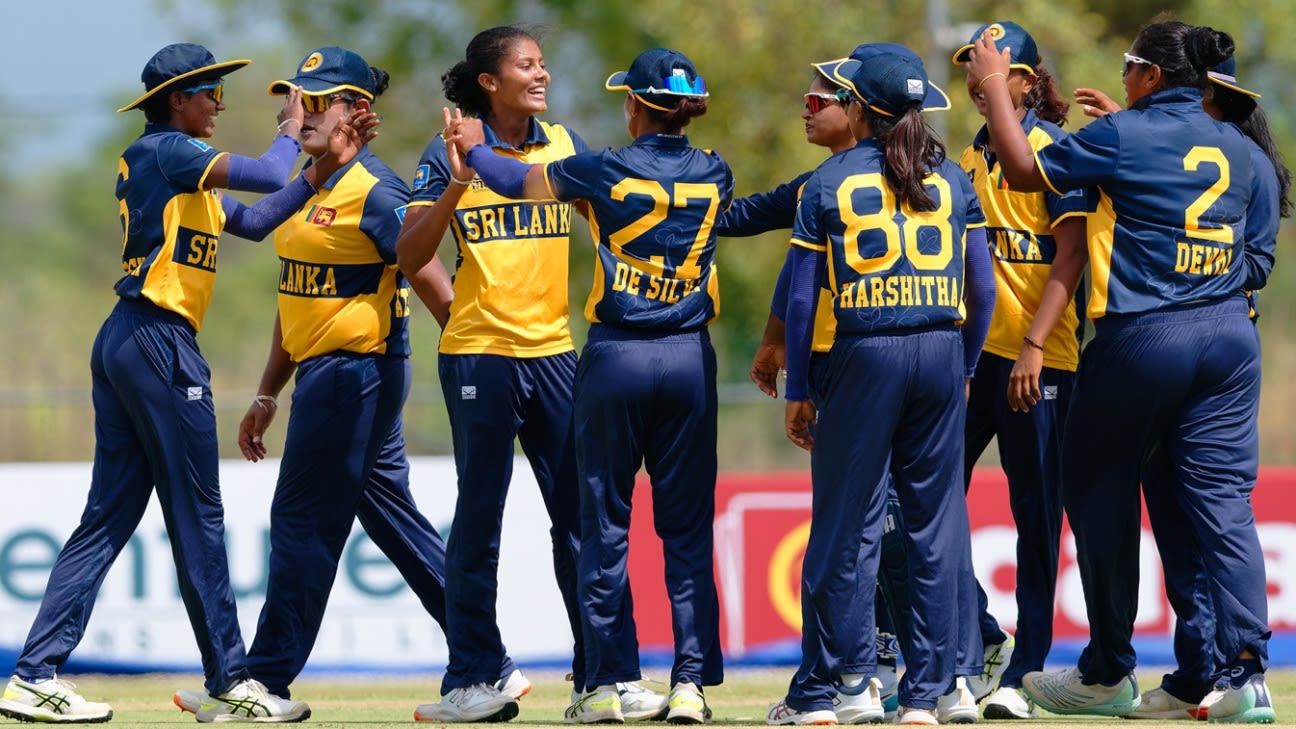
“We are doing a lot vis-a-vis women’s cricket because women’s cricket, as you can see, is growing very fast. But there are many aspects of that game which we are also finding our way, like the disciplinary side, the management side, the protection side.
“Roshan does a lot of work trying to find out from other countries what they do for player protection and nurturing them as being good players. So we are lucky we have Roshan and Kumar.”
Wettimuny added that discussions were underway to employ high-performance coach and coach developer Ashley Ross as part of plans to improve coaching across the country.
“We are working on a two-year programme and I’m hoping that that will materialise soon because that’s one of the key areas as far as I’m concerned where we are really falling short. No fault of anybody, don’t get me wrong, [but] because of the cricket boom that took place, we were not in a position to keep pace with our coaching skills.
“By coaching skills, I’m not just meaning a certification. It’s that overall knowledge where you know how to discuss with a student why he is doing something, why he shouldn’t do something, etc. So we are very keen and very excited if Ashley Ross comes in.”
The move follows sports physiotherapist Alex Kountouris’ recent week-long visit, where he ran the rule over Sri Lankan Cricket’s strength, conditioning and training practices. Kountouris, revealed Wettimuny, is expected to continue periodically working with SLC.
On the umpiring front, SLC will be recruiting two umpiring coaches to “help our first-class coaches right down to school coaches” as well as an umpire manager. A similar setup will be put in place for groundstaff, where a curator manager is set to overlook all of Sri Lanka’s international cricketing venues.
“They will [also] go into club grounds, school grounds, and we will support even the schools if they need help.”
A move to change the Under-23 domestic tournament to an Under-21 tournament was also proposed, with a view to helping better the transition of players from age-group cricket to being national-team ready.
“If we bring [in an] Under-21 tournament, players can actually play through and then we’ll find we can nurture those players from 18 to 21, keeping an eye on them from SLC. So that’s something which is in discussion.”
This update was part of an hour-long media briefing led by Wettimuny and transformation committee chairman Eran Wickramaratne. They intend to conduct more such conferences to keep the public abreast of the reform process underway.
As things stand the draft constitution must still be reviewed by Sri Lanka’s attorney general and the legal draftsman’s department before translations. It will then be submitted to cabinet for their approval, gazetted and finally tabled in parliament for a first reading, following which two weeks will be given for any challenges before court.
If there are any challenges, court will deliver its verdict “generally between 48 to 72 hours”. Following that a date will be set for the second and third readings in parliament, and if approved only then will it become law.
The ICC has thus far has maintained its stance that the implementation of a new SLC constitution and election of a permanent governing body should be done posthaste, but there is a belief among members of the transformation committee that they will be given the time needed to complete their task.
While the update itself was lukewarm, there were some insights provided into how the new constitution proposes to improve the SLC structure, key among which was the introduction of a 14-member board consisting of seven appointed members and seven elected by SLC’s membership body.
As per the draft constitution, representatives from five nominated bodies, including the bar association of Sri Lanka and institute of chartered accountants, alongside a ministry representative, will appoint seven members to the board. Among those seven, there must be “a chartered accountant, an IT specialist, a marketing expert, a lawyer and an ex-cricketer who has been retired at least three years”. These appointed directors, while being afforded the possibility to serve a maximum of two four-year terms, will also rotate on an annual basis so as to ensure a semblance of continuity.
“But the chairman will always be from the appointed committee members, not from the elected office. So he’ll be totally independent,” Wettimuny said.
“I think we have done a lot in these seven or eight weeks. And we will continue to move as fast as we can till this new constitution is in place. And I hope whoever then that comes in will continue with what we are doing because we are looking at a two-year sort of programme to make sure that the game does not suffer.”
