
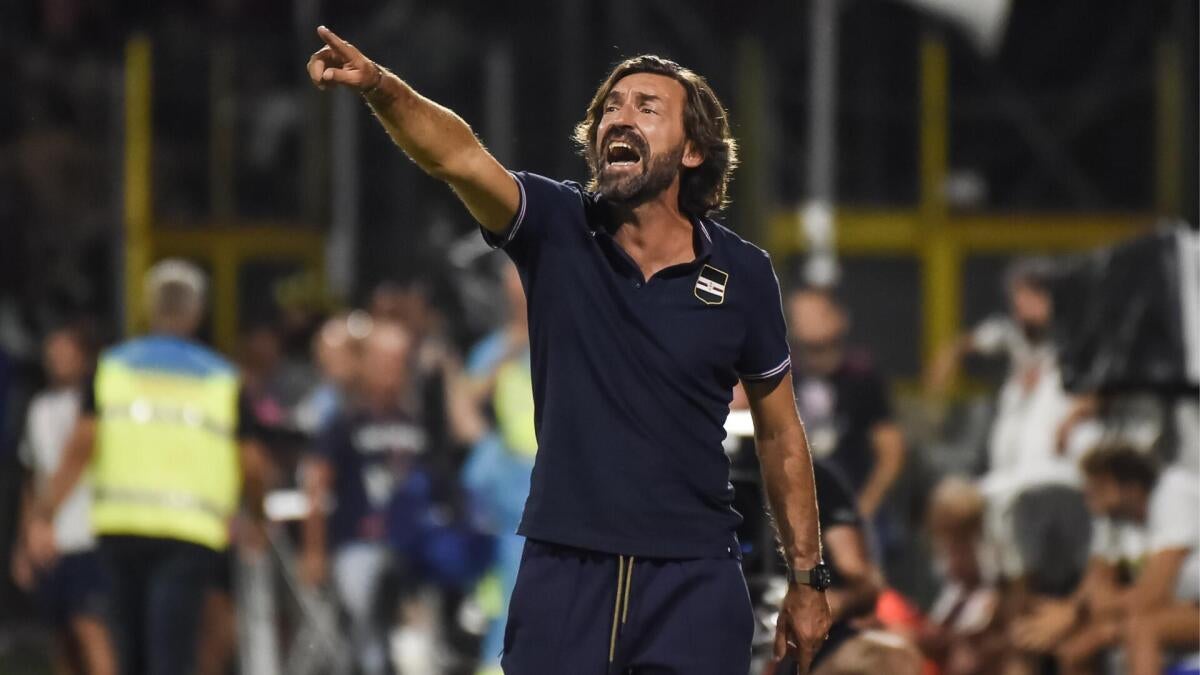
It’s almost impossible to explain what is going on in Italy these days. After failing to qualify for a third consecutive World Cup earlier this year, Italian soccer has once again descended into chaos. The exclusion from the 2026 World Cup led to the dismissals of former manager Gennaro Gattuso, FA President Gabriele Gravina and Italian head of delegation Gianluigi Buffon. The Italian federation, in the meantime, had time to restructure itself and new elections for a new president were called. On June 22, former Italian National Olympic Committee president and Milano Cortina 2026 president Giovanni Malago was elected president of the Italian Football Federation (FIGC), with the clear objective of restoring Italian soccer to the top of the international game over the coming years. However, his first month of presidency was far from easy as he had to face multiple challenges.
Here’s what to know about the newest Italian chaos:
Early, critical moves lasted less than three weeks
His first major decision was to appoint AC Milan legend and former club director Paolo Maldini, together with former PSG sporting director Leonardo, to oversee the Italian national team’s rebuild. Their cycle lasted 17 days, where they met with Pep Guardiola and Carlo Ancelotti to become the new Italian national team coach but then proposed Andrea Pirlo as their ideal candidate. The situation then took a dramatic turn as political pressure influenced the decision-making process, leading to the resignations of both Maldini and Leonardo. Malago responded by appointing Roberto Mancini as Italy’s new head coach, marking his return to the national team three years after his controversial resignation, when he left the Azzurri just weeks before taking charge of Saudi Arabia.
From Pep Guardiola to Andrea Pirlo
When Maldini and Leonardo were appointed by Malago, they decided to start looking at the national team as a club, meaning they were considered as sporting directors that had to start recruiting the new head coach. Maldini and Leonardo were thinking big and immediately decided to meet with Pep Guardiola to become the next Italy manager but the former Manchester City head coach decided to turn the offer down as he wants to focus on his private life after leaving Manchester City earlier this summer. As Maldini himself announced, the duo also met with Carlo Ancelotti to explore the possibility of hiring him for the next four-year cycle that will lead to the 2030 World Cup, but Ancelotti also turned their offer down as he’s currently managing the Brazilian national team.
This is when Maldini and Leonardo had in their minds another surprising name: Pirlo, current coach of United FC in Dubai and 2006 World Cup winner with the Azzurri, became the frontrunner for job, despite his managerial curriculum. Maldini and Pirlo are close friends, and the former AC Milan sporting director had wanted to appoint him as the club’s head coach in the summer of 2023 before he was dismissed by the Rossoneri’s ownership. However, the prospect of Pirlo taking charge of the Italian national team failed to win over the majority of supporters, while political opposition to the appointment also emerged.
The Russian connection
The controversy started from Pirlo’s role as a global ambassador for Russian sports betting company Fonbet. Since Russia’s full-scale invasion of Ukraine in February 2022, relations between Italy and Russia have remained highly strained, making any association with Russian companies politically sensitive. Pirlo’s trips to Russia and his commercial partnership with Fonbet quickly became the subject of political debate, ultimately prompting FIGC president Malago to call the deal off. Maldini and Leonardo, who asked for their freedom of choice when appointed, decided to step down after what happened.
Andrea Pirlo wrote in a statement, “Out of respect for the institutions, the federation and everybody involved, I have chosen to remain silent until now. However, after learning last night that I am no longer a candidate for the Italy national team head coach position, I feel it is necessary to clarify a few points. Over the past few days, I have watched with great bitterness as the debate regarding my name and the possibility of my taking on the role of Italy national team head coach unfold. Throughout my career, first as a player and then as a coach, I have always performed my duties within full respect of the laws of the countries I have worked in and the contracts I signed. The professional collaboration that is the subject of recent controversy came about as part of my working experience in the United Arab Emirates and is exclusively of a commercial and sporting nature.”
The ‘new era’ of Mancini and Ranieri
On Tuesday, Malago announced his decision to appoint Roberto Mancini as the Italy head coach and Claudio Ranieri as technical director of the new cycle.
“Time is short, your curiosity as the media also pushed us to hurry, and I evaluated the person who should become the new coach of Italy is Roberto Mancini, for a whole list of reasons. I take responsibility for those, but I want to clarify that this does not change the new culture and role of a technical director,” Malago said.
Mancini is back for a second spell in charge of Italy after leading the Azzurri from 2018 to 2023 and guiding them to a historic UEFA Euro 2020 title. For Ranieri, meanwhile, it marks the first appointment of his career with the Italian national team after refusing to join the Azzurri in the summer of 2025 when he was the advisor of the Friedkin family for AS Roma.
Mancini’s return has also proved unpopular among many supporters. The 61-year-old resigned as Italy head coach in the summer of 2023 amid widespread criticism before accepting the Saudi Arabia job just days later. His first spell in charge also ended on a sour note after Italy failed to qualify for the 2022 World Cup, suffering a shock playoff defeat to North Macedonia a few months after winning the Euros in the summer of 2021. Malago, a close friend of Mancini, ultimately chose to bring him back in the hope of restoring Italy’s winning mentality.
Meanwhile, Ranieri, alongside a third figure whose appointment is expected to be announced in the coming days, will be tasked with transforming Italian soccer from the grassroots level. While the German federation have announced Jurgen Klopp as the new head coach and the French federation announced Zinedine Zidane, Italy are struggling to find their way back to the top of soccer’s elite. The turmoil surrounding the federation’s first major decisions suggests the new era has begun much like the old one, with controversy and uncertainty.
