
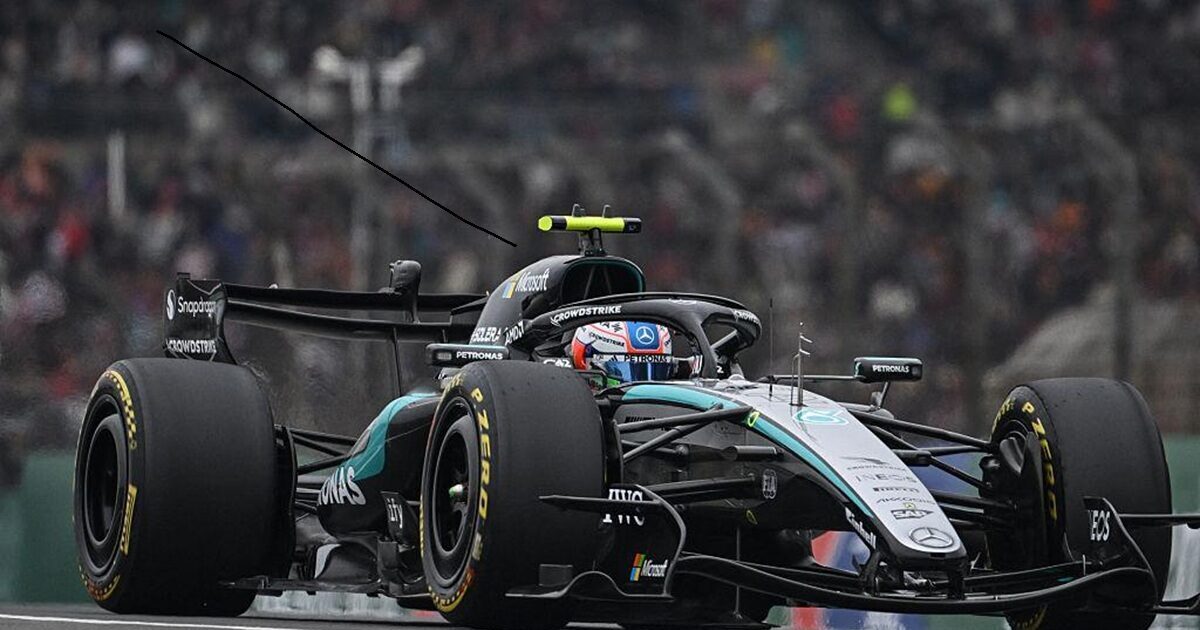
Kimi Antonelli’s rapid rise from karting in Bologna to Formula 1 with Mercedes are traced through his junior titles, Formula 2 breakthrough, and debut Grand Prix season. The profile highlights his early promotion over Formula 3, his replacement of Lewis Hamilton, and his record-setting pace.
It also examines his driving style, strengths in qualifying and wet conditions, and the challenges he still faces with consistency and tyre management. By 2026, he had become a Grand Prix winner and championship contender before turning 20.
Who is Kimi Antonelli?
Andrea Kimi Antonelli is an Italian Formula 1 driver whose journey to the front of the grid moved at extraordinary speed.
Born in Bologna on 25 August 2006, Antonelli grew up around racing. His father, Marco, competed in sports cars and ran a karting team, giving his son an early view of the discipline, preparation and pressure behind motorsport.
Antonelli began karting at seven. Mercedes recognised his potential before he had reached his teenage years and added him to their junior programme in April 2019, when he was 12.
That backing placed expectations around him early. Yet the greater challenge was not attracting attention. It was proving, at every level, that the attention was justified.
By the age of 19, Antonelli had won junior championships, skipped Formula 3, completed a full Formula 2 campaign, replaced Lewis Hamilton at Mercedes. [Subject] become a multiple Formula 1 Grand Prix winner.
His official Formula 1 driver profile lists six victories, 11 podiums, six pole positions and 354 career points after the 2026 Belgian Grand Prix.
A racing childhood in Bologna
Antonelli did not enter motorsport as an outsider searching for a way into the paddock. Racing formed part of his childhood.
However, access alone could not create the results that followed. Karting demands consistency across different circuits, changing conditions and closely matched machinery. Antonelli repeatedly delivered.
In 2019, he won the WSK Euro Series and WSK Super Master Series titles in the OK Junior class. He also finished second in the FIA Karting European Championship and fifth in the World Championship.
He stepped into the senior OK category in 2020 and won both the FIA Karting European Championship and the WSK Euro Series. Another European title followed in 2021.
Those victories showed more than raw speed. Antonelli learnt how to control championships, recover from difficult weekends and perform when rivals expected him to win.
Mercedes saw those qualities developing alongside his pace.
The team’s official Antonelli biography charts a junior career built around early titles, rapid promotions and increasing responsibility.
Antonelli dominated Formula 4
Antonelli made his Italian Formula 4 debut in 2021. He contested nine races and reached the podium three times, offering an early indication that his karting success would transfer to cars.
His first full campaign in 2022 removed any remaining doubt.
Driving for Prema Racing, Antonelli won the Italian Formula 4 and ADAC Formula 4 championships. Across the two series, he recorded 22 victories, 21 pole positions and 27 podium finishes.
The statistics were remarkable, but his control of the season mattered just as much. Antonelli did not rely on one dominant weekend or a narrow run of form. He won across different tracks and conditions while carrying the expectations attached to a leading junior team.
He also won the Formula 4 competition at the FIA Motorsport Games, adding another title to a season that established him as one of Europe’s outstanding young drivers.
Formula Regional tested his resilience
Antonelli moved into Formula Regional machinery in 2023 and immediately won the Formula Regional Middle East Championship.
He then turned his attention to the Formula Regional European Championship by Alpine. The European campaign provided a more demanding examination of his race management and resilience.
Antonelli won five races and secured the championship at Zandvoort. He scored 300 points, setting a series record for the highest total in a season at that time.
The title-clinching race captured many of the qualities that later defined his reputation. Starting eighth in wet conditions, he moved through the field, reached the lead and pulled clear.
Antonelli has often looked comfortable when grip changes and a driver must rely on instinct. He later described that Zandvoort performance as a race in which he could drive naturally without overthinking each movement.
That ability in the rain would appear again during his Formula 2 career.
Why Mercedes skipped Formula 3
The conventional route from Formula Regional leads into Formula 3. Mercedes chose a more aggressive path.
Antonelli moved directly into Formula 2 with Prema Racing for 2024. The decision increased the pressure around him because he faced older, more experienced drivers in faster and more complex machinery.
He also entered the championship during the introduction of a new Formula 2 car. Prema struggled to match their usual position at the front, leaving Antonelli to learn the category without a consistently dominant package.
His early results were steady rather than spectacular. That period mattered because it forced him to work through difficulties that could not be solved by speed alone.
The breakthrough arrived in a wet Sprint race at Silverstone. Antonelli controlled the conditions and won by more than eight seconds. He then charged through the field to win the Budapest Feature Race two weeks later.
Those two victories made him the youngest multiple winner in Formula 2 history. Antonelli finished sixth in the championship with 113 points, having demonstrated enough speed and adaptability to convince Mercedes that he was ready for Formula 1.
Mercedes handed Antonelli Hamilton’s seat
Lewis Hamilton’s decision to join Ferrari created one of the most closely watched vacancies in Formula 1.
Mercedes could have chosen an established driver. Instead, they promoted Antonelli to partner George Russell in 2025.
The decision carried obvious risk. Antonelli had completed only three full seasons in single-seater racing and had never competed in Formula 3. He was also replacing the most successful driver in Mercedes’ Formula 1 history.
He became the third-youngest driver to start a Grand Prix when he lined up in Australia at 18 years, six months and 19 days old. Starting 16th, he recovered to finish fourth.
Antonelli’s opening race did not settle every question, but it demonstrated that he could race responsibly in traffic and make progress without allowing the occasion to overwhelm him.
His rookie season tested more than pace
Antonelli scored points in five of his first six Grands Prix. At Miami, he became the youngest driver to take a Formula 1 pole position of any kind when he qualified first for the Sprint at 18 years and 251 days old.
His maiden Grand Prix podium followed in Canada. Antonelli finished third at 18 years and 294 days, making him the third-youngest podium finisher in Formula 1 history.
He was also the first Italian to stand on an F1 podium since Jarno Trulli at the 2009 Japanese Grand Prix.
The middle of the season proved more difficult. Antonelli struggled with confidence in the car, unfamiliar tyre behaviour and the intensity surrounding his first home Grand Prix at Imola.
Those weekends revealed a young driver still learning how quickly a Formula 1 campaign can turn. Small set-up problems became missed qualifying opportunities. Poor grid positions exposed him to incidents and difficult strategies.
Antonelli did not escape criticism, but he recovered.
Second place in Brazil and third in Las Vegas helped him finish seventh in the 2025 Drivers’ Championship. His final record stood at 150 points and three podiums from 24 Grands Prix.
That recovery mattered as much as the headline results. Antonelli entered his first season surrounded by predictions about what he might become. He ended it with evidence that he could absorb disappointment and rebuild his confidence.
Antonelli turned promise into victories
Antonelli began the 2026 season as a more settled and complete driver.
A second-place finish in Australia provided a strong opening. He then took pole and his maiden Grand Prix victory in China.
At 19 years, six months and 17 days, Antonelli became the youngest Grand Prix polesitter in Formula 1 history. His victory the following day made him the second-youngest Grand Prix winner, behind Max Verstappen.
Victories followed in Japan, Miami and Canada. His success in Montreal gave him four consecutive wins before he extended the sequence to five at Monaco.
The run displayed different parts of his game. Some victories came through outright qualifying speed. Others demanded tyre management, calm restarts or control under pressure from more experienced rivals.
World in Sport’s account of his Canadian Grand Prix victory showed how Antonelli managed a tense internal Mercedes battle before taking control of the race.
A retirement in Barcelona and a difficult British Grand Prix interrupted his momentum. However, he responded by winning from pole at Spa-Francorchamps, taking his sixth victory of the season.
The Belgian Grand Prix review details how he resisted pressure from Charles Leclerc and Max Verstappen to restore his championship momentum.
For continuing race coverage, results and driver analysis, visit World in Sport’s Formula 1 section.
Kimi Antonelli’s Formula 1 record
Statistics are correct after the Belgian Grand Prix on 19 July 2026. Antonelli’s 2026 total includes 21 points earned in Sprint races. He had also recorded one Sprint victory and two Sprint podiums by that stage.
Readers unfamiliar with how those results contribute to the championship can explore the Formula 1 points system.
What defines Antonelli’s racing style?
Antonelli’s speed is most obvious when he trusts the car beneath him.
He commits strongly through high-speed corners and appears comfortable allowing the car to move underneath him. His karting background shows in the speed of his reactions and his willingness to adjust his line during close racing.
Wet conditions have repeatedly brought out his best. His Formula Regional title-clinching drive at Zandvoort and first Formula 2 victory at Silverstone both came in the rain.
Antonelli also has genuine one-lap pace. His record-breaking Sprint pole in Miami during 2025 offered an early sign. [Subject] while his six Grand Prix poles across the opening ten rounds of 2026 confirmed that qualifying speed had become a major strength.
Qualifying in Formula 1 rewards confidence, tyre preparation and precision under severe time pressure.
World in Sport’s guide to Formula 1 qualifying explains how Q1, Q2 and Q3 gradually reduce the field before the pole-position shootout.
Antonelli’s best laps combine aggression with clean inputs. He attacks braking zones without making the car look unnecessarily unsettled, then carries speed through the corner rather than relying only on late braking.
His racecraft has also developed quickly. He can follow closely, judge changing grip and make decisive moves when an opportunity appears.
Where does Antonelli still need to improve?
Antonelli’s rise should not disguise the fact that he remains early in his Formula 1 development.
Confidence has occasionally influenced his performance. During his rookie season, difficulties with tyres and car balance affected his commitment in qualifying. Once that confidence dropped, he sometimes required several sessions to recover it.
Experience will help him recognise unproductive set-up directions sooner. It should also improve his ability to limit damage on weekends when Mercedes are not the fastest team.
He must continue refining tyre management across long stints. The fastest qualifying car does not always provide the best race platform, particularly when temperatures change or traffic disrupts the planned strategy.
Antonelli will also face growing pressure as his success increases. Racing for Mercedes already brings scrutiny. Racing for a championship places every mistake, radio message and strategic decision under a harsher light.
The challenge is no longer proving that he belongs in Formula 1. It is maintaining his level when rivals, expectations and title pressure all close in.
Can Kimi Antonelli become a Formula 1 world champion?
Antonelli has already demonstrated the speed required to win a world championship.
He can qualify at the front, control a Grand Prix and perform in changing conditions. He has also shown that difficult periods do not have to define an entire season.
Mercedes have supported him since he was 12. That long relationship gives Antonelli stability, technical familiarity and a team that understand how he responds to pressure.
His partnership with Russell provides another important test. Russell is experienced, fast and established within Mercedes. Antonelli must continue measuring himself against a team-mate capable of winning races and mounting his own championship challenge.
A title will depend on more than Antonelli’s talent. Mercedes must provide a reliable car across a full season, execute strategies cleanly and manage two ambitious drivers without damaging their own campaign.
Even so, Antonelli’s potential is no longer based only on junior results or private testing. He has won Grands Prix, broken major records and led the championship.
He has moved from promising prospect to genuine title contender faster than almost anyone expected.
The person behind the rapid rise
Antonelli’s career has unfolded at a pace that could easily make the individual disappear behind the statistics.
He entered Formula 1 as a teenager replacing Hamilton, carrying the expectations of Mercedes and the hopes of an Italian fanbase waiting for another regular winner.
Yet he has generally resisted presenting himself as a finished product. He has spoken openly about lost confidence, difficult weekends and areas of his driving that require work.
That honesty matters.
Young drivers often receive praise that leaves little room for ordinary development. Every strong result becomes proof of greatness, while every mistake invites an equally exaggerated reaction.
Antonelli’s career has included both. His response has usually been to return to the work rather than argue with the noise around him.
The number 12 on his car connects the stages of that journey. He used it while winning in Formula 4 and Formula Regional before carrying it into Formula 1.
It has followed him from junior paddocks to the front row of a Grand Prix grid.
Final verdict
Kimi Antonelli’s rise has been unusually fast, but it has not been effortless.
His junior titles established his talent. Formula 2 tested his patience. His rookie Formula 1 season exposed weaknesses that he could no longer solve through natural speed alone.
The response in 2026 showed why Mercedes invested in him so early.
Antonelli became a Grand Prix winner, a record-breaking polesitter and a championship leader before his 20th birthday. More importantly, he showed signs of becoming a driver who can recover from setbacks without losing the qualities that made him special.
There will be more difficult races. Rivals will adapt, Mercedes will face pressure and Antonelli will make mistakes as he continues to develop.
However, his Formula 1 potential no longer belongs to the distant future.
Kimi Antonelli has already reached the front. The next question is whether he can remain there long enough to become Italy’s next Formula 1 world champion.
