
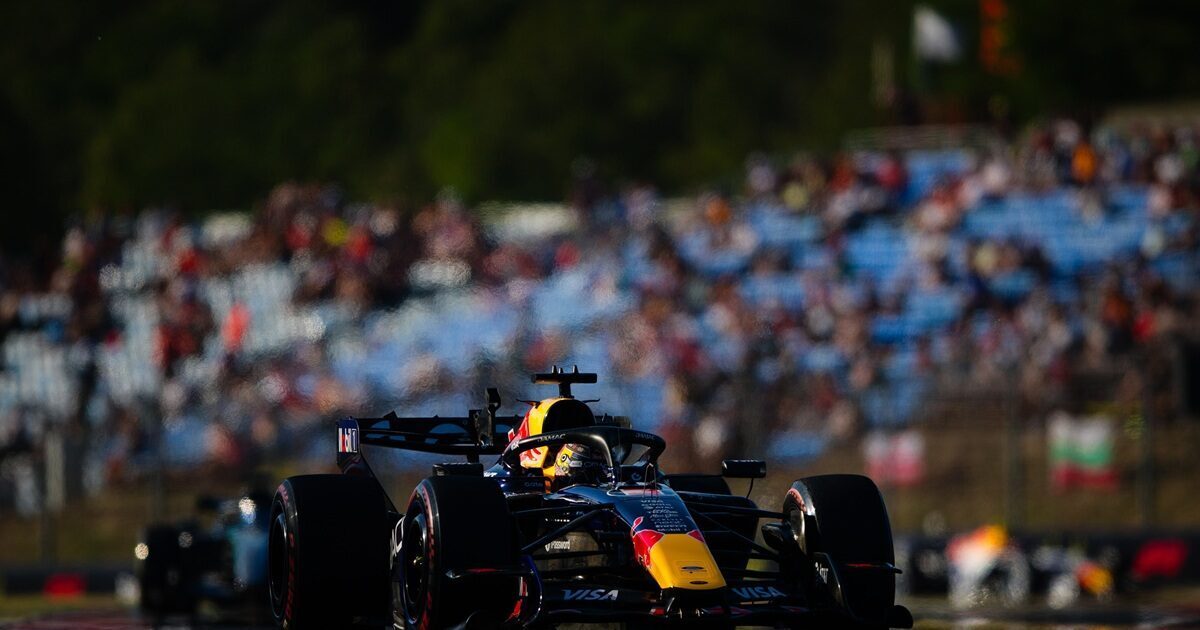
Max Verstappen arrived in Formula 1 before he was old enough to hold a standard driving licence in several countries. Within little more than six years, he had become a world champion.
His ascent was fast, occasionally controversial and rarely conventional. Verstappen skipped the traditional route through Formula 2, entered Formula 1 at 17 and won his first Grand Prix at 18. He then developed from an aggressive young racer into one of the most complete and relentless drivers of his generation.
Four consecutive World Championships between 2021 and 2024 established him among the sport’s most successful competitors. Record-breaking seasons followed, but his reputation rests on more than statistics.
Verstappen’s defining qualities are his commitment under braking, ability to control a car near its limit and refusal to accept a result he believes could have been better.
Those characteristics have made him a compelling figure for Formula 1 supporters and an essential inclusion among World in Sport’s leading sports profiles.
Max Verstappen career overview
A racing education began before childhood ended
Verstappen was born into a family that understood racing at an unusually high level.
His father, Jos Verstappen, competed in more than 100 Grands Prix and shared a Formula 1 grid with drivers including Michael Schumacher and Mika Häkkinen. His mother, Sophie Kumpen, was an accomplished kart racer who competed against several future professional drivers.
Max began karting when he was four and a half. Racing quickly became the centre of family life, with Jos overseeing much of his development, preparation and mechanical work.
The process could be demanding. Verstappen later described long journeys across Europe, difficult conversations after poor performances and an expectation that he would learn from mistakes immediately.
That upbringing helped create the emotional control he later showed in Formula 1. Pressure was not something he first encountered in front of packed grandstands. It had surrounded him throughout his childhood.
By 2013, Verstappen had become one of international karting’s outstanding young competitors. He won European titles in the KF and KZ categories before becoming KZ world champion at 15.
The FIA’s account of that championship described him as the youngest driver to win the world title in karting’s professional category.
He moved into single-seaters in 2014 and immediately challenged more experienced drivers in European Formula 3. Verstappen won races, finished third in the championship and convinced Red Bull that he did not need several more seasons in junior categories.
Formula 1 arrived when Verstappen was only 17
Red Bull placed Verstappen with Toro Rosso for the 2015 season. His debut at the Australian Grand Prix made him the youngest driver to start a Formula 1 race.
His age created considerable debate. Some observers questioned whether a driver with one season of single-seater experience could safely handle Formula 1 machinery and its intense competitive environment.
Verstappen answered through his performances.
He scored points in his fourth Grand Prix and regularly attempted overtakes in places where other drivers preferred to wait. Fourth-place finishes in Hungary and the United States demonstrated that he could turn difficult or unpredictable races into major results.
There were mistakes. He crashed heavily in Monaco after making contact with Romain Grosjean, while several established drivers criticised the aggression of his defending.
However, Verstappen did not enter Formula 1 to remain anonymous. Even when an attempted move failed, his speed and confidence were clear.
The young driver also showed an instinctive understanding of wheel-to-wheel racing. He could judge grip, place the car close to a rival and change his line while maintaining momentum. Formula 1 had found a new attraction, even before Verstappen had machinery capable of winning.
The 2016 Spanish Grand Prix changed his career
Red Bull promoted Verstappen to their senior team before the 2016 Spanish Grand Prix, exchanging his place with Daniil Kvyat after four races of the season.
The decision placed an 18-year-old alongside Daniel Ricciardo without a full pre-season of preparation. Verstappen responded by winning immediately.
Mercedes drivers Lewis Hamilton and Nico Rosberg collided on the opening lap, but Verstappen still needed to complete a demanding race. Red Bull split their strategies, leaving him to protect his tyres during a long final stint while Kimi Räikkönen applied constant pressure.
Verstappen remained composed and crossed the line first. At 18 years and 228 days, he became Formula 1’s youngest Grand Prix winner.
The result changed how the paddock viewed him. He was no longer simply a gifted teenager with an uncertain ceiling. He had shown that he could manage tyres, defend under pressure and execute a race for a leading team.
Later that season, a remarkable wet-weather performance in Brazil strengthened his reputation. After a late pit stop dropped him down the order, Verstappen charged back through the field and finished third.
His lines, car control and willingness to search for grip drew comparisons with some of Formula 1’s finest wet-weather drivers.
Verstappen turned Red Bull promise into a title challenge
Red Bull could not consistently match Mercedes during Verstappen’s first full seasons with the team. Reliability problems and an underpowered engine frequently limited his opportunities, particularly in 2017.
However, Verstappen continued to win when circumstances allowed.
He took victories in Malaysia and Mexico in 2017 before adding two more during a more consistent 2018 campaign. That season also exposed the tension between his speed and impatience. Early incidents cost points, while a collision with Esteban Ocon during the Brazilian Grand Prix led to a confrontation after the race.
Verstappen gradually refined his approach. He remained aggressive, but he became more selective about when to attack and more controlled when a victory was available.
Red Bull’s move to Honda power in 2019 brought further progress. Verstappen delivered Honda’s first Formula 1 victory since 2006 at the Austrian Grand Prix and claimed his first pole position later that year in Hungary.
By 2020, he had become Mercedes’ most persistent opponent. Red Bull were not yet strong enough to sustain a championship challenge, but Verstappen repeatedly separated himself from the rest of the field.
The foundations of that period, including the team’s rise and technical development, are explored in the World in Sport Red Bull F1 team guide.
The 2021 title fight made Verstappen world champion
Formula 1’s competitive order changed in 2021. Red Bull produced a car capable of challenging Mercedes across an entire season, setting up a fierce contest between Verstappen and Hamilton.
The rivalry became increasingly intense as the year progressed.
They collided at Silverstone and Monza, exchanged victories and arrived at the final round in Abu Dhabi level on points. Verstappen had won 10 Grands Prix, while Hamilton had won eight.
Hamilton controlled most of the deciding race, but a late Safety Car created one final lap of racing. Verstappen, running on fresher tyres, passed Hamilton at Turn Five and secured his first World Championship.
The restart procedure generated widespread controversy and remains one of the most debated finishes in Formula 1 history. However, the wider season had demanded exceptional consistency from both drivers.
Verstappen had matched a seven-time champion across 22 races and delivered when the title came down to one final opportunity. The contest also added another defining chapter to Lewis Hamilton’s record-breaking career.
Four championships created a modern Formula 1 dynasty
Verstappen’s first championship came after a season-long fight. His next two arrived through increasing levels of control.
Red Bull overcame early reliability trouble in 2022, allowing Verstappen to recover from a poor start and dominate the second half of the campaign. He won 15 races, then a Formula 1 record for one season, and secured the title in Japan.
The 2023 campaign took his dominance further. Verstappen won 19 of the 22 Grands Prix, including 10 consecutive victories between Miami and Italy.
He rarely looked hurried despite the scale of his advantage. Instead, he managed races from the front, protected his tyres and responded whenever changing conditions created a threat.
The numbers reflected an extraordinary season: 575 points, 21 podiums, more than 1,000 laps led and an 86.3 per cent victory rate.
His fourth championship in 2024 required a different type of performance. Red Bull began strongly, but McLaren and Ferrari closed the gap as the season developed. Verstappen went 10 Grands Prix without a victory before producing a memorable wet-weather comeback in São Paulo.
He secured the championship in Las Vegas despite Red Bull no longer possessing the grid’s most consistently competitive car.
The 2025 fight revealed another side of Verstappen
Red Bull did not provide Verstappen with the fastest overall package in 2025, but he remained in the championship contest until the final round.
McLaren led the way for much of the campaign. Verstappen nevertheless collected eight victories and launched a powerful late-season recovery.
He ultimately finished second in the standings, only two points behind Lando Norris.
Although the result ended his sequence of four consecutive championships, the season strengthened his standing. Verstappen had taken a less consistent car into a title fight against a team with the championship’s strongest package.
It also showed how his racing had evolved. The younger Verstappen often tried to force a result immediately. The established champion had learned to stay in contention, collect the maximum available points and wait for the competitive picture to change.
What makes Max Verstappen’s racing style so effective?
Verstappen’s reputation began with aggression, but describing him only as aggressive overlooks the qualities that sustain his success.
His greatest strength may be the speed with which he processes a developing situation. He identifies changes in grip, tyre condition and a rival’s positioning before committing to a move.
That decision-making allows him to brake late without relying entirely on hope. Verstappen often positions his car in a way that forces an opponent to choose between conceding the corner or taking a greater risk around the outside.
His car control supports that approach. When the rear begins to move, he frequently corrects it without losing the momentum needed to complete an overtake or defend the position.
Verstappen is also comfortable changing his driving during a race. He can push aggressively during a crucial phase, then settle into a controlled rhythm to preserve the tyres.
Wet conditions provide the clearest demonstration of his instincts. Rather than following the conventional racing line, he searches for grip across different parts of the circuit and adjusts from one corner to the next.
His communication with the pit wall can sound blunt, particularly when the car does not behave as expected. Yet that intensity reflects how quickly he recognises performance limitations.
The same driver who attacks a qualifying lap without visible hesitation can provide detailed feedback over a long race distance. Speed attracts attention, but technical understanding helps turn it into championships.
Verstappen has rewritten Formula 1’s record book
Verstappen has accumulated records at both ends of his career.
He remains the youngest driver to start a Formula 1 Grand Prix and the youngest to win one. Regulation changes introduced after his arrival mean the debut record is unlikely to be broken under the current licensing system.
His 2023 season produced several further landmarks. No driver had previously won 19 Grands Prix in one campaign or recorded 10 consecutive victories.
That run also produced the highest single-season win percentage achieved by a driver completing a modern multi-race championship.
Through the 2026 Belgian Grand Prix, the official Formula 1 career statistics listed Verstappen with 71 victories, 130 podiums and 48 pole positions from 243 Grand Prix entries.
Those 71 victories placed him third on Formula 1’s all-time list, behind only Hamilton and Michael Schumacher.
Numbers cannot settle every historical comparison. Cars, calendars and points systems have changed considerably between generations.
However, Verstappen’s combination of championship success, peak dominance and sustained race-winning output places him firmly in World in Sport’s discussion of the greatest Formula 1 drivers.
A private personality sits behind the public intensity
Verstappen’s personality outside the car contrasts with the aggression seen on track.
He can be direct during interviews and rarely disguises his feelings about a car, regulation or incident. However, he has generally shown limited interest in building a celebrity persona around his success.
Racing remains central to his identity. The sport was part of his childhood, shaped his relationship with his parents and became his profession before he reached adulthood.
That background helps explain why defeats can appear so personal. Verstappen does not treat a poor result as a minor interruption to a wider public life. Competition is the central standard by which he judges his work.
His bluntness can divide opinion, but it also gives supporters a clear sense of the person behind the helmet. Verstappen does not attempt to make every answer diplomatic or every emotion marketable.
That authenticity has helped him build a passionate following in the Netherlands and beyond. Orange-clad supporters transformed races at Zandvoort, Spa and the Red Bull Ring into unofficial home events during his championship years.
The 2026 season tests Verstappen in a new era
Formula 1 introduced major chassis and power-unit regulations for 2026, forcing every team to reconsider how its car generated performance.
Red Bull entered the era with their own Red Bull Ford power unit and a revised technical structure. Verstappen also returned to racing with the number three after losing the right to use the champion’s number one.
The opening 10 rounds proved difficult. Verstappen recorded three podium finishes but no victories and stood seventh in the Drivers’ Championship with 91 points after the Belgian Grand Prix.
Those figures represented an unfamiliar position for a driver who had spent four years controlling the championship.
However, they also created another test of his range. Dominance had demonstrated how effectively Verstappen could control races from the front. A less competitive period demanded development work, patience and the ability to take opportunities when faster cars encountered trouble.
World in Sport’s continuing Formula 1 coverage follows how that challenge develops under the new regulations.
Verstappen’s Formula 1 legacy is already secure
Max Verstappen does not need another championship to establish his place in Formula 1 history.
Four consecutive titles, 71 victories and a collection of records have already taken him beyond the level reached by most champions. His peak in 2023 ranks among the most dominant individual seasons the sport has witnessed.
Yet the most important part of his story may be the development behind those achievements.
The teenager who arrived in 2015 relied on instinct, confidence and an almost unlimited appetite for risk. The champion retained those qualities while adding patience, technical understanding and race management.
That evolution made him more than a spectacular overtaker. It made him a driver capable of shaping an era.
Verstappen remains uncompromising, occasionally divisive and intensely competitive. He races as though every lost tenth of a second is a personal challenge.
That relentless approach has produced controversy as well as success. Above all, it has made him one of the defining Formula 1 drivers of the 21st century.
