





NBA mock draft 2026: Lottery simulation delivers young star to big winner


The 2026 NBA Draft is a source of hope for teams desperately seeking a savior. This was always going to be a great class with three potential No. 1 overall talents sitting at the top in Kansas’ Darryn Peterson, BYU’s A.J. Dybantsa, and Duke’s Cameron Boozer, but it looks even better now as more freshman studs have continued to emerge.
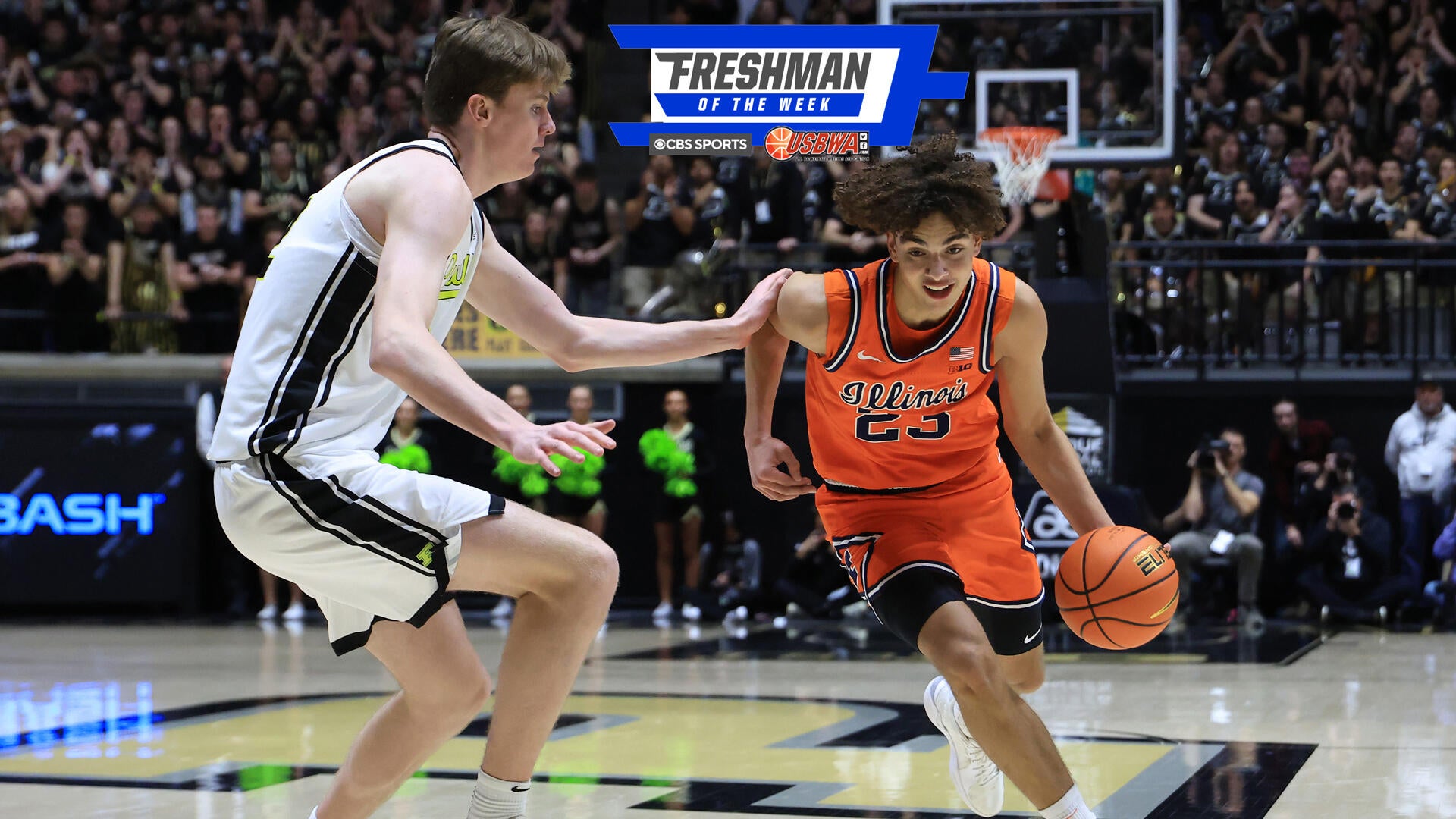
Houston’s Kingston Flemings and Illinois’ Keaton Wagler weren’t on our preseason draft board. Both had already solidified themselves as lottery picks in our last update, and they look like even stronger prospects now after Wagler dropped 46 points on Purdue and Flemings hung 42 points on Texas Tech over the weekend.
For this update, I simulated the lottery drawing via Tankathon, and one lucky team moved way up to land a top prospect. The selections in this mock don’t really factor team fit into consideration, and more mirror my evaluations of the players in this class. Here’s our latest projection of the 2026 NBA Draft.
1. Indiana Pacers – Cameron Boozer, F, Duke
You don’t draft for fit with the No. 1 overall pick. Boozer is the best prospect in this year’s draft, and in my opinion one of the strongest NBA prospects of the last decade. If the fit is a little wonky with Pascal Siakam right now, who cares: Boozer was born in July 2007 and Siakam was born in April 1994, meaning they aren’t exactly on the same timeline. Boozer will probably a full-time four eventually, but he’s versatile enough to play the three early in his career while Indiana figures out what it needs around him and Tyrese Haliburton long-term. His intersection of brains, brawn, and skill is so enticing that it eclipses any concerns about his athletic explosiveness or fluidity. Boozer is massively productive and he’s been driving winning at an elite level dating back to high school. He’s an excellent shooter, passer, and driver for his size, and he knows how to make plays defensively even without quick-twitch movement ability. With Boozer and Haliburton, the Pacers could run the East for a long, long time.
2. Dallas Mavericks – Darryn Peterson, G, Kansas
The Mavs jumped up from No. 8 in the lottery standings to the No. 2 pick in our sim, and if that happens Dallas fans are never allowed to complain about the Luka trade again. Peterson hasn’t been at his best this season as he’s dealt with a hamstring strain and constant cramping issues, but if his burst can return to form, he has everything teams want out of a lead guard. Peterson’s shot-making is a signature skill in this class, and he’s shown he has easy NBA range both off the dribble and off-the-catch. He’s a ball dominant star who demands high usage, but he also moves better without the ball than similarly heliocentric players. While his rim attacking and defensively playmaking haven’t looked as good as advertised as he’s battled his various ailments, I fully trust both areas to bounce-back once he’s healthy. Peterson and Cooper Flagg would have the chance to be an all-time NBA duo.
3. Sacramento Kings – A.J. Dybantsa, F, BYU
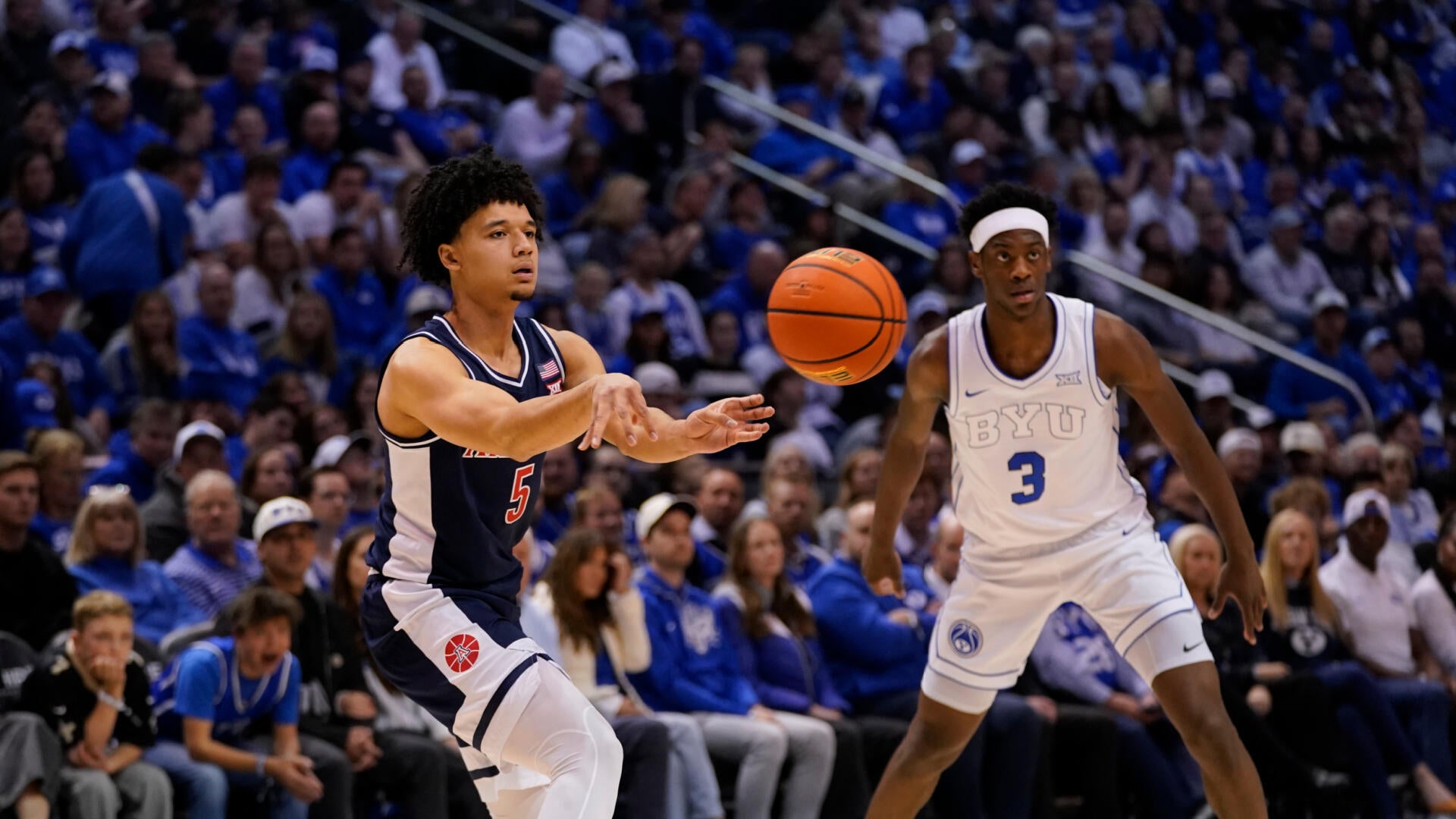
Dybantsa is a monster scoring prospect as a huge 6’9 wing with rare athletic explosiveness, flexibility, and shot-making. He should punish switches at the next level with an overwhelming amount of length and power against smaller wings and guards, and too much speed for bigs. BYU has been an awesome system to showcase Dybantsa’s strengths with wide open driving lanes inside the arc, and I do wonder how he’ll adjust to the NBA if he needs to be more of a shooter. For now, Dybantsa is only hitting 30.2 percent of the 53 three-pointers he’s taken, which is a slight concern in terms of both volume and accuracy. I’m more worried about Dybantsa’s defense: he doesn’t just imprint his will on that end despite his phenomenal tools. Dybantsa feels more likely to go No. 1 than No. 3, but he has more holes in his game than Boozer and Peterson, and to me that makes him the clear third-best prospect in this class.
4. Washington Wizards – Caleb Wilson, F, North Carolina
Wilson is an explosive 6’10 forward with a non-stop motor who makes some jaw-dropping plays above the rim on both ends of the floor. Wilson can be a clunky fit in a halfcourt offense as a total non-shooter right now (5-of-20 from three), but he still makes an impact with his transition scoring, offensive rebounding, and impressive passing. He has some real shot-making touch from mid-range, and shows some awesome pivot moves to score around the basket. The real signature skill for Wilson’s offense is his ability to dunk absolutely everything, with 60 dunks in his first 19 college games. He can do a little bit of everything defensively: switch onto the ball, provide secondary rim protection as a roamer, end possessions with a rebound, and get out into the passing lanes with his length. Wilson plays so hard on every possession and has such good physical tools that it’s hard to see him failing even if the jumper never comes around. He should be an excellent role player at minimum with the potential to be more.
5. Atlanta Hawks (via Pels) – Kingston Flemings, G, Houston
Flemings has my vote for the best prospect in a loaded point guard class because he can play on or off-the-ball on offense while providing solid defense. His driving ability jumps off the screen with an explosive first-step, nasty change-of-direction moves, and the ability to stop on a dime. He can create an advantage with the ball in his hands, but he might be even better extending advantages by catching the ball on the move and attacking decisively. His pull-up mid-range game should be built for playoff moments, but it would be nice to see him shoot more threes or get to the foul line more often. Flemings’ playmaking is even better than his scoring, showing a sixth sense for finding teammates at the rim while avoiding turnovers. Defensively, Flemings has a strong chest, long arms, and quick hands that helps him rack up steals and blocks (5.8 percent stock rate) and quickly turn defense into offense. He’s not the biggest lead guard, but he’s still a natural facilitator with scoring punch and defensive ability. That sounds like a top-5 prospect to me.
6. Brooklyn Nets – Mikel Brown Jr., G, Louisville
The Louisville freshman just made his return from a long absence due to a back injury, but he’s looked like a capable offensive engine with pull-up shooting, high-level playmaking, and the ability to attack off the bounce all part of the package. Brown has been cold as a shooter so far this year, but the high school and international tape shows a player who can create his own look from deep and knock it down. His playmaking has a case for best in class among this lot of point guards (I’d still give Flemings the edge there), and while I don’t think he’ll be a plus defensively early in his career, he has the height and flashes of takeaway production that at least gives him a chance on that end. Brown has dunk contest-worthy athleticism, three-point contest-worthy shooting, and awesome passing. If it all holds, he has enough other skills to a high-level guard.
7. Utah Jazz – Hannes Steinbach, F, Washington
Steinbach’s offensive rebounding might be the single best skill in this class outside of the top-three prospects. He’s simply a monster on the glass who does a great job establishing position inside, reading the ball off the rim, and controlling it with his impossibly good hands. He’s a fluid athlete inside the arc who can catch the ball on the move and finish plays above the rim, and he’s showing good touch on awkward finishes as an interior scorer. Steinbach is not an outside shooter right now (9-of-27 from three), but his touch is good enough from the foul line (76 percent) that he should have some long-term upside there. Steinbach probably has to shoot it at least a little bit because he’s not really big enough to play center, and he’s not at all a defensive anchor. I see him fitting best in a two-big front court where he can help gain extra possessions on the offensive glass and his defensive shortcomings can be covered by a primary rim protection and rangier wing defenders. Utah feels like a good fit for that context long-term, and he could certainly improve a middling rebounding team from day one.
8. Charlotte Hornets – Yaxel Lendeborg, F, Michigan
Yaxel Lendeborg might be older than fifth-year Chicago Bulls guard Josh Giddey, but he’s also one of the most complete prospects in this class with rare tools that should translate to immediate success. Lendeborg has been developing at his own rate after not playing organized basketball until he was 15 years old, and now after junior college and mid-major stops he’s become one of the best players in the country. Lendeborg was mostly a center the last two years at UAB, but he’s made a successful transition to the wing at Michigan where he’s upped his three-point rate while continuing to have a big impact defensively. He has an ideal physical profile for an NBA front court player at 6’9, 240 pounds with a 7’4 wingspan, and he has a real chance to be a long-term shooter after hitting 33.3 percent of 8.5 three-point attempts per 100 possessions so far this season, as well as 88 percent of his free throws. The Hornets have looked good lately with a core of LaMelo Ball, Kon Knueppel, and Brandon Miller, and adding a massive front court player with shooting ability like Lendeborg could make them a playoff team in the East next season.
9. Milwaukee Bucks – Jayden Quaintance, C/F, Kentucky
Quaintance tore his ACL in Feb. 2025, and he didn’t look like himself upon debuting in Dec. after transferring to Kentucky. He’s currently out of the lineup again with swelling in the same knee, and it’s possible he always returned too early. Before the injury, Quaintance looked like an elite paint defender as a 17-year-old freshman at Arizona State. His combination of length (7’5), strength, and quickness easily makes up for his lack of height as a 6’9 center, and allows him to have rare coverage versatility while cutting off the most valuable spots on the floor. Offensively, he showed some flashes of playmaking feel at ASU, and looked better as a driver in small sample at Kentucky. The truth is that Quaintance’s offense is a major question as an undersized non-shooter with poor touch from the foul line thus far. With a lot of questions about the players in this range, I still like Quaintance for his mix of youth, physical tools, and defensive acumen at the five. I would not be at all surprised if he fell down the board to around the late lottery given the persistent offensive questions in what has been a lost season.
10. Memphis Grizzlies – Koa Peat, F, Arizona
I’m still having a hard time ranking Peat in this class despite the relatively uncomplicated evaluation of his game. Start here: After a killer high school career, Peat has immediately been one of the best and most productive players on arguably the best team in college basketball as a true freshman. The 6’7 wing has a super powerful frame that dishes out punishment to opponents on both ends of the floor. On offense, Peat sets hard screens, rolls to the basket with force, and finishes through contact inside the paint. He’s just a total non-shooter at this point, which is his biggest limitation as a player, and makes him a tricky fit to build around. He projects as a good defender who can hound bigger wings at the point of attack, and he also has some switchability with enough strength to keep bigs away from the paint and the quickness to hang at least a little bit with smaller guards. I love Peat’s motor and play-finishing, but could still see myself dropping him eventually given how hard it is for 6’7 non-shooters without spectacular defensive IQ to impact the game at the highest levels.
11. Oklahoma City Thunder (via Clips) – Braylon Mullins, G, UConn
Mullins has a case as the best off-ball three-point shooter in the class, and he’s shown he has a chance to compete defensively, too. The 6’6 wing is making 36.5 percent of his threes on 8.8 three-point attempts per 100 possessions, and he’s taken advantage of the Huskies’ pristine spacing to also convert 64.4 percent of his two-point attempts even if it’s only at 3.5 per game. With a 3 percent steal and 2.3 percent block rate, Mullins doesn’t look like a defender who will have a target on his chest at the next level. He projects as a solid connective wing with high volume three-point shooting right now, and that’s something every team could use.
12. San Antonio Spurs (via Hawks) – Keaton Wagler, G, Illinois
Wagler was the No. 150 recruit coming out of high school, but he’s made an instant impact since he’s arrived on campus at Illinois. The 6’6 freshman has moved into more of an on-ball role recently, and he’s shown flashes of high-level off-the-dribble shooting and good decision-making as a passer. Wagler wasn’t a highly regarded recruit because he’s simply not an explosive athlete, to the point where he hasn’t recorded a single dunk this year and hasn’t produced many blocks or steals. That’s usually an alarming sign for a 6’6 potential lottery pick, but if he keeps shooting the ball at this level, it might not matter. I worry about Wagler’s ability to do the dirty work early in his career if he’s not getting a lot of usage. He looks long (there’s no wingspan measurement on him but I’d guess 6’10) but he lacks strength and just doesn’t project as any kind of stopper or glass cleaner right now. Still, it’s impressive that Wagler has finished 65 percent at the rim with 89 percent being unassisted, and his slow-motion step-back threes when he gets a big on a switch can be a thing of beauty. If the Spurs are looking for a young wing with shooting upside around Victor Wembanyama, Wagler makes sense starting around this range. This is mostly a Best Player Available pick.
13. Chicago Bulls – Patrick Ngongba, C, Duke
Cameron Boozer gets all the attention for Duke, but his front court partner Patrick Ngongba has also been quietly driving the Blue Devils’ success. The 6’11 sophomore center is one of the most efficient play-finishers in the country with 73.3 percent shooting on two-pointers, with many of those makes coming against crowded paints in the halfcourt. Ngongba is also an awesome passer who will zip the ball into cutters, and he’s shown some long-term shooting promise this year too. Ngongba’s defensive paint protection is good with long arms and a strong base, and the numbers back it up: Duke’s defense is 11.5 points per 100 possessions better with him on the floor. I do wish he was a little bit more of an ass kicker on the glass, and it doesn’t always seem like he plays with the best motor. Still, Ngongba is a solid two-way center with flashes of perimeter skill that gives him both a high floor and some sneaky upside. That’s a worthy swing for a Bulls team that desperately needs a big man in their young core.
14. Portland Trail Blazers – Labaron Philon, G, Alabama
Philon is a drive-and-kick master with a deadly floater game who has made a real leap as a three-point shooter this year. The Alabama guard felt like he could have been a first-rounder last year, but opted to return to school at the 11th hour for an NIL deal. It feels like he’s improved his stock this year as he’s taken on a primary ball handler role in the wake of Mark Sears’ graduation, but he was always going to face frame questions after weighing in at 175 pounds at the combine with a tiny 8’3 standing reach. Philon is really shifty off the dribble, and if he can maintain his 38 percent three-point stroke, he can be a spark-plug guard that generates paint touches and blends scoring and playmaking. The Blazers have Damian Lillard and Scoot Henderson ready to go for next year, but Philon still fits the roster pretty well long-term if they think he’s the best player available.
15. Miami Heat – Dailyn Swain, F, Texas
Swain followed Sean Miller from Xavier to Texas for his junior season, and he’s become one of the most complete wings in the country. Swain was always an athletic wing defender with a great frame (6’8, 225 pounds), and he’s continued to shine on the defensive end at Texas while taking a bigger offensive jump. Swain is a true slasher now who has made 70 percent of his shots at the rim with 83 percent of those looks coming unassisted. He’s shown an improved mid-range game off the dribble, and he’s still an 80 percent free throw shooter for his career. Swain just isn’t a good three-point shooter yet, but his driving and passing look better than ever, and he’s also impacted the game on the margins. This is way higher than where he’s usually at in mock drafts, but both his athletic and statistical profiles are so good that this doesn’t feel like a reach.
16. Memphis Grizzlies (via Magic) – Tyler Tanner, G, Vanderbilt
Vanderbilt lost three straight after their 16-0 start, but sophomore star Tyler Tanner is still driving their success. Tanner is about as small as an NBA prospect can be these days at 6-foot, 175 pounds, but he plays incredibly physically despite his lack of size. He’s started the year with 13 dunks in his first 19 games, and he’s putting up ridiculous steal and block rates defensively. He’s super fast with the ball in his hands, and he usually makes good decisions with it with a +4.4 assist to turnover ratio. Tanner is going to have to be a great shooter to be successful in the league at his size, and so far this year he’s making 39 percent of his threes and 87.6 percent of his free throws. The NBA really doesn’t like small guards right now, but Tanner’s statistical profile is so good that he’s worthy of a look.
17. Golden State Warriors – Joshua Jefferson, F, Iowa State
Jefferson has become one of the best players in the country as a senior at Iowa State. At 6’9, 240 pounds, he’s a physical forward with rare passing ability for his size. Jefferson’s 28.7 percent assist rate is a massive number, and the fact that he’s improved to a 36 percent three-point shooter on his first 53 attempts this year shows even more comfort playing on the perimeter offensively. He’s a really good defensive rebounder who can provide some paint protection defensively, too. Jefferson potentially gives a team the benefits of a double big look without cramping their spacing if his shooting improvement holds, and the value he adds as a passer should be enough to lock him in as a first rounder.
18. Atlanta Hawks – Aday Mara, C, Michigan
Mara is a massive center at 7’3, 255 pounds, with a reported 7’7 wingspan. He’s a bit of a plodding athlete, but his rim protection in drop coverage is an elite skill (12.6 percent block rate, No. 8 in the country) and he’s a ridiculous passer for his size. Mara will bomb outlet passes after grabbing a rebound, and his ability to hit cutters out of the high post is every bit as dazzling. He’s a terrible shooter at this point, and his 44 percent free throw mark will have to improve for serious looks in this range. Still, Mara’s size and smarts are an enticing combo.
19. Oklahoma City Thunder – Thomas Haugh, F, Florida
Haugh fits the bill of a connective wing who can finish plays inside, space the floor, and hold his own defensively. Florida’s offense is 13 points per 100 possessions better when he’s on the floor, and its defense is 7 points per 100 better with him on, too. I’m a bit worried about his ability to score inside the paint when he doesn’t have a dunk, but he has appeal as a low-usage offensive wing who doesn’t need to spend time on the ball to have an impact.
20. Toronto Raptors – Bennett Stirtz, G, Iowa
Stirtz might be the best pick-and-roll ball handler in the class with his ability to blend three-level scoring with good playmaking vision off a live dribble. He’s making 68 percent of his rim attempts (67 percent self-created), 47 percent of his mid-range shots, and 36.8 percent of his threes (60 percent unassisted) so far this year. Stirtz could struggle to contain the ball defensively, but he’s pretty good at getting into the passing lanes and scoring in transition. Iowa plays at such a slow pace that it’s hard to evaluate how he’ll adapt to the higher octane NBA game, but there’s a lot to like about both his skill set and production.
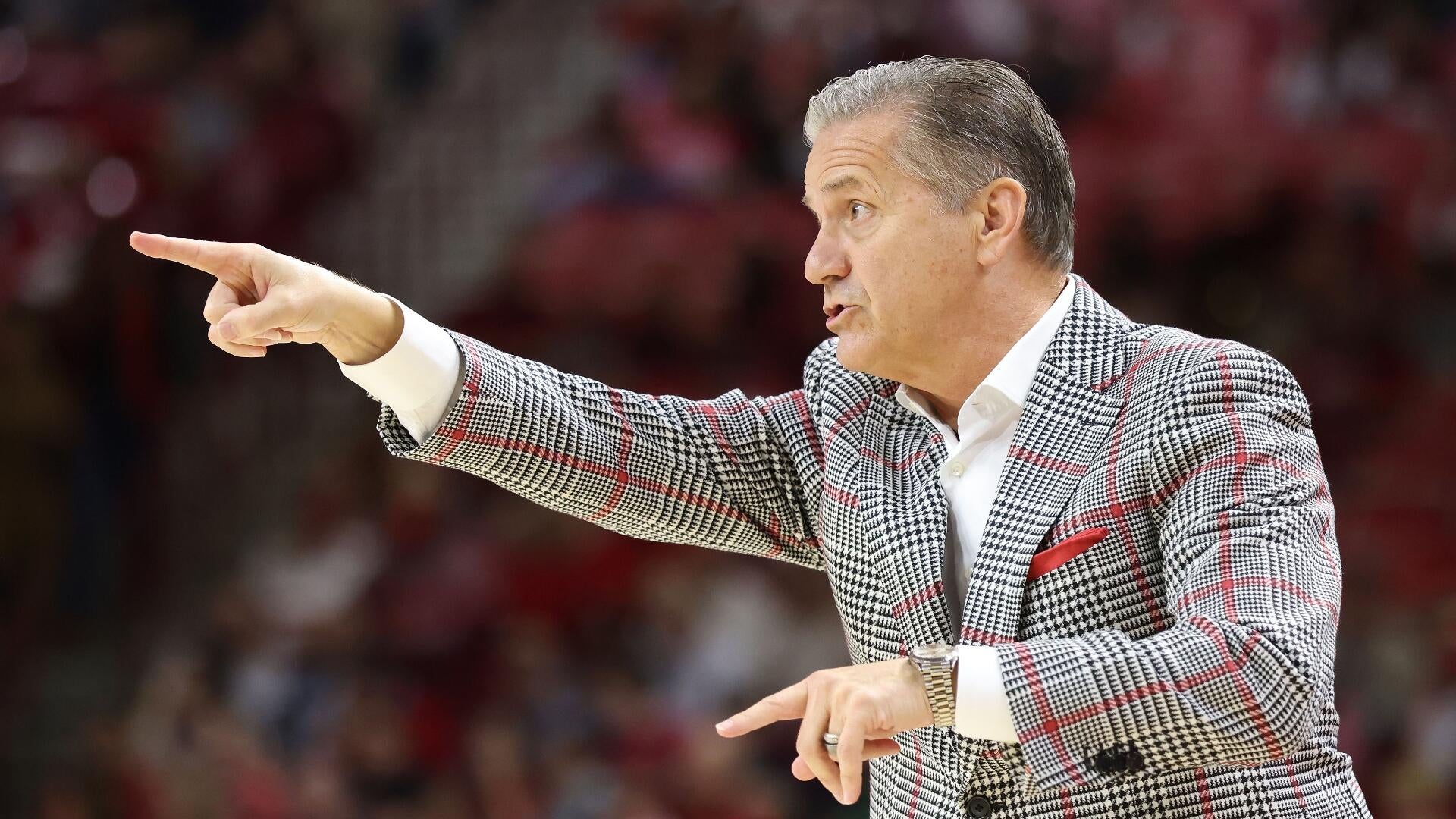
21. New York Knicks – Darius Acuff, G, Arkansas
Drafting a John Calipari guard is always a safe bet, and Acuff is next in line after a massively productive start for Arkansas. At 6’3, Acuff always has grown man strength, and uses it on battering ram drives to the rim. His shot-making from deep (41 percent on 9.1 threes per 100 possessions) has exceeded all expectations, and he’s also shown the ability to hit tough mid-range pull-ups. He’s also proven to be one of the best pure playmakers in this class, and he’s especially good throwing lob passes for alley-oops. Acuff’s rim finishing against NBA length is a bit of a question, but his biggest concerns come on the defensive end. He just doesn’t do much off the ball defensively, and has the worst rebounding numbers of any first-round guard. Acuff could easily go 10 spots higher than this on draft night, but this feels like the right range to me.
22. Minnesota Timberwolves – Nate Ament, F, Tennessee
Ament entered the year tracking as a possible top-5 pick, but he struggled almost immediately against top competition. The idea of Ament is a 6’10 wing with a dribble, pass, shoot skill set, but evaluators have rarely seen it this year as he’s struggled to adjust to the physicality of the game on a cramped floor with Tennessee. His finishing has been poor (57 percent at the rim), he has more turnovers than assists so far, and his shot (28 percent from three on 8.2 attempts per 100 possessions) needs a lot more work. Tennessee was always going to be a tough offensive context for him, and there’s still a talented player in here somewhere with the right strength training program and shooting development. He had a breakout game against Alabama recently with 29 points on 10-of-20 shooting, and could be starting to earn back his reputation as a top prospect. This is probably his draft floor.
23. Los Angeles Lakers – Morez Johnson, F, Michigan
Johnson transferred from Illinois to Michigan over the offseason, and has proven he isn’t just a paint scorer this year. The sophomore has an outstanding physical profile at 6’9, 250 pounds with long arms, and he’s been beating up opponents all year in the best front court in college basketball. Johnson is one of the best defenders in this year’s class. He also kicks ass on the glass, finishes efficiently inside, and has shown significantly improved touch from the foul line (62 percent as a freshman to 78 percent as a sophomore). He’s still mostly a non-shooter from deep at this point (he’s 4-of-10 from three on the year), but if teams think he can shoot it eventually, his ability to defend all over the floor and bully people inside makes him a sure-fire first-rounder.
24. Charlotte Hornets – Karim Lopez, F, New Zealand Breakers
Lopez has been on the NBA’s radar for years as a strong 6’8 forward with loads of scoring upside. Born and raised in Mexico, Lopez has been spending his pre-draft year in the Australian-based NBL, where he’s showcased his ability to finish through contact, grab-and-go off the defensive glass, and provide some secondary shot-blocking. Lopez is a shaky outside shooter right now (30 percent on 69 attempts), and he’s not yet a good passer or decision-maker with the ball in his hands. His ability to defend will also be a bit of a question. Where he’s really good is attacking as a face-up scorer off the bounce at his size.
25. Oklahoma City Thunder – Cameron Carr, G, Baylor
A 6’5 wing with a reported 7’2 wingspan, Carr is a great outside shooter who has hit 43.3 percent of his first 97 attempts from deep. With 60 percent shooting from two point range, Carr is posting ridiculous 65.4 percent true shooting that makes him one of the most efficient scorers in this class. He has explosive leaping ability with the clear path to the basket, and has already thrown down 29 dunks this year. Carr is also 21 years old and still needs to add a lot of strength to his frame, improve his decision-making, and clean up his defensive technique. He might end up going much higher than this, because that combination of length and shooting will be appealing.
26. Boston Celtics – Malachi Moreno, C, Kentucky
Moreno is a mobile freshman center with great hands who impacts the game in a lot of areas outside of scoring. He’ll crash the glass, block shots, and keep the offense moving with his passing ability. Moreno isn’t super long (reportedly a 7’1 wingspan), doesn’t shoot threes yet, and has been an underwhelming finisher so far. He may be quite big enough to anchor a defense without shooting ability, but his all-around impact is still impressive.
27. Denver Nuggets – Tounde Yessoufou, G, Baylor
Yessoufou is a 6’5 wing with a jacked frame who can hound the ball defensively, crash the offensive glass, and space the floor. He can’t do much off the dribble, so he’ll have to be a better shooter eventually than his current 30 percent mark from three.
28. Cleveland Cavaliers – Chris Cenac Jr., C, Houston
Cenac is a 6’11 freshman big man who has the tools to eventually control the paint, and he’s also a very good outside shooter for his size. He’s hitting 38.5 percent of his threes on 39 attempts so far this year, and he’s also posting an excellent 27 percent defensive rebound rate. Cenac just plays kind of soft right now on the offensive end, and his feel for rotations isn’t great defensively yet. It’s hard to find a true stretch five, and maybe Cenac can turn into one one day if his feel and physicality improve.
29. Detroit Pistons – Christian Anderson, G, Texas Tech
Anderson is small for a modern NBA game, but he’s a deadly shooter off the bounce and a good facilitator for his teammates. He’s hitting 44 percent of his threes on 157 attempts so far, and he’s also been really efficient scoring from mid-range and at the rim. His finishing volume isn’t very high and scouts will question whether he can finish over NBA length inside. He’s naturally going to get picked on defensively because of his lack of size, but Anderson has some hope on that end because he’s a high-IQ player with quick hands.
30. Washington Wizards – Motiejus Krivas, C, Arizona
Krivas is a massive 7’2, 260 pound big man who has been quietly driving Arizona’s undefeated season. He’s been a super efficient scorer (69 percent true shooting) who cleans the glass on both ends, protects the rim, and makes his free throws (81 percent from the line). The Lithuanian isn’t much of a passer or shooter yet, but he’s really good at doing all the traditional big man stuff.
What's Your Reaction?
 Like
0
Like
0
 Dislike
0
Dislike
0
 Love
0
Love
0
 Funny
0
Funny
0
 Angry
0
Angry
0
 Sad
0
Sad
0
 Wow
0
Wow
0