
The Tour de France Femmes returns on Saturday, 1 August with its longest and most demanding route yet, placing the world’s leading stage racers on a course designed to test every part of their game.
The fifth edition begins in Lausanne and covers 1,175km across Switzerland and France before finishing in Nice on Sunday 9 August. Its decisive features include a 21km individual time trial, a summit finish on Mont Ventoux and a final stage built around four ascents of the Col d’Èze.
Defending champion Pauline Ferrand-Prévot returns, but Demi Vollering arrives after winning the Giro d’Italia Women and starts as the narrow favourite. Marlen Reusser, Kasia Niewiadoma-Phinney, Anna van der Breggen and Vuelta Femenina winner Paula Blasi strengthen a general classification field with few obvious weaknesses.
For followers of the wider season, World in Sport’s cycling news and analysis will track the race from the Swiss Grand Départ through to the final yellow jersey presentation in Nice.
When Is the Tour de France Femmes 2026?
The Tour de France Femmes avec Zwift runs from Saturday 1 August to Sunday 9 August. It forms part of the UCI Women’s WorldTour calendar and will feature 154 riders across 22 teams, with seven riders selected by each squad.
The race starts outside France for only the second time. Lausanne hosts the opening stage before the peloton travels from Aigle to Geneva on stage two. Stage three begins in Geneva and crosses into France on the way to Poligny.
The official route contains three flat stages, three hilly stages, two mountain stages and one individual time trial. Organisers have listed a record 18,795 metres of elevation across the nine days, taking the race through the Jura, Massif Central and Alps.
Tour de France Femmes 2026 Route
The official Tour de France Femmes route steadily increases the pressure. The first two stages should favour the faster finishers, but stage three introduces meaningful climbing before the time trial establishes the first clear general classification order.
The route then becomes increasingly difficult through Beaujolais and the Massif Central. Mont Ventoux provides the principal summit finish on stage seven. But the short final stage around Nice means nobody can treat the yellow jersey battle as settled before the final afternoon.
Which Stages Will Decide the Tour de France Femmes?
Stage Three Introduces the First Serious Climbs
Stage three takes the race 156.5km from Geneva to Poligny and marks the first day on which the general classification contenders must remain fully alert.
The principal early challenge is the Col de la Faucille, an 11.4km first-category climb averaging 6.3 per cent. The Côte de Lajoux and Col de la Savine follow before the riders tackle the short Côte de Chaux-Champagny inside the closing 25km.
The finish may not produce the largest gaps of the Tour, particularly because the longest climbs arrive early. However, the stage can expose poor form, weaken teams and place riders under pressure before the following day’s time trial.
Stage Four Rewards the Strongest Time Triallists
The 21km individual time trial from Gevrey-Chambertin to Dijon is the first stage certain to create measurable gaps between the yellow jersey contenders.
It is long enough for specialists such as Reusser to gain significant time, while Vollering and Van der Breggen should also see it as an opportunity. The lighter climbers cannot afford a major setback because the race offers only two mountain stages in which to recover lost ground.
The time trial will not decide the Tour on its own. It should, however, determine which riders can race defensively before Ventoux and which contenders must begin attacking through the hilly middle stages.
Stage Five Creates Opportunities on Mont Brouilly
Stage five packs eight classified climbs into 140km between Mâcon and Belleville-en-Beaujolais.
The repeated changes in gradient should make the stage difficult to control. Its most important climb is Mont Brouilly, which rises for three kilometres at an average of 7.7 per cent and reaches its summit with only 10.6km remaining.
Another uncategorised rise follows before the road drops towards the finish.
This is a day for aggressive all-rounders and riders who can climb explosively. It may also encourage contenders to attack a rival who showed weakness during the time trial.
Stage Six Offers One Final Test Before Ventoux
The 153.4km route from Montbrison to Tournon-sur-Rhône contains six classified climbs and almost no prolonged flat section.
The Col de Lalouvesc measures 8.6km at five per cent, while the Côte de Boucieu-le-Roi comes inside the final 16km. A bonus point near Saint-Barthélemy-le-Plain increases the tactical importance of the closing kilometres.
General classification teams may prefer to conserve energy before Mont Ventoux. However, the terrain gives breakaway specialists and ambitious outsiders a chance to force the favourites into a difficult chase.
Stage Seven Finishes on Mont Ventoux
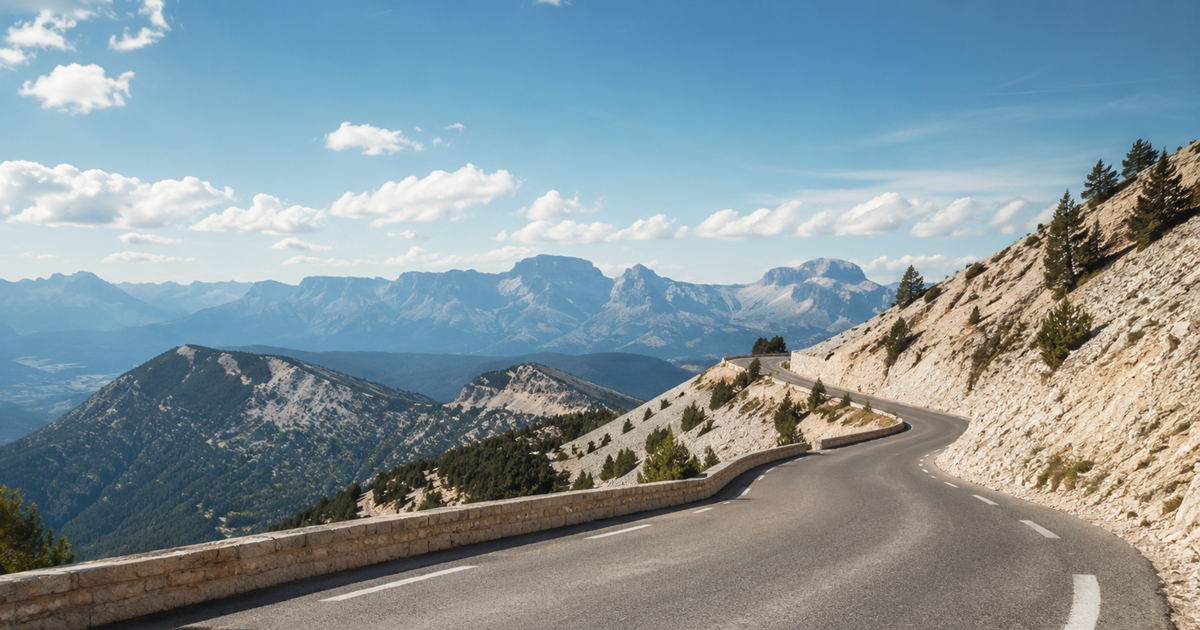
Mont Ventoux provides the clearest opportunity to transform the general classification.
Stage seven covers 146.8km and contains 3,565 metres of climbing. The route passes over the Col de la Grande Limite, Col du Colombier and Col de Suzette before approaching the final ascent through Bédoin.
The classified section of Mont Ventoux measures 15.7km at an average gradient of 8.8 per cent and finishes at an altitude of 1,910 metres. Its exposed upper slopes can magnify the effects of heat and wind, while the sustained gradient leaves little opportunity for a struggling rider to recover.
Ferrand-Prévot produced the defining climbing performance of the 2025 Tour on the Col de la Madeleine. Vollering, Reusser, Niewiadoma-Phinney and the Other Contenders must now find an answer on an even more exposed summit.
For more coverage of decisive Tour mountains, World in Sport examined how the men’s Alpe d’Huez double-header shaped the 2026 Tour de France.
Stage Nine Keeps the Race Open Until Nice
The final stage is only 99.2km, but the distance disguises its severity.
The riders complete four ascents of the Col d’Èze. The opening three climbs each measure 7.7km at 5.9 per cent. The final ascent uses a steeper approach, rising for six kilometres at 7.6 per cent before the race descends back towards Nice.
The last summit arrives with 15.4km remaining, leaving enough road for an attack to succeed but also creating a tense descent towards the finish. Fatigue, team strength and confidence on technical roads could matter as much as pure climbing ability.
A rider carrying a narrow advantage out of Mont Ventoux will not be able to relax. The repeated circuit gives rival teams several opportunities to isolate the race leader and change the final result.
Who Are the Tour de France Femmes 2026 Favourites?
Demi Vollering
Vollering enters the Tour with the strongest recent stage-racing result after winning the 2026 Giro d’Italia Women.
The Dutch rider finished 30 seconds ahead of Antonia Niedermaier, with Van der Breggen third at 1.37. That victory completed a run in which Vollering combined strong climbing with the ability to recover time when the race reached its decisive mountain finish.
She won the Tour de France Femmes in 2023 and has reached the podium in every edition. Her combination of climbing, time trialling and consistency makes her the most complete contender on this route.
FDJ United-SUEZ has built its seven-rider selection around Vollering. Évita Muzic and Juliette Berthet provide mountain support, while Franziska Koch, Amber Kraak and Marie Le Net can protect their leader on faster and more exposed stages.
Pauline Ferrand-Prévot
Ferrand-Prévot returns as the defending champion after winning the 2025 race by 3.42 from Vollering.
She took control with a solo victory on the Col de la Madeleine and then won the final stage to confirm Team Visma | Lease a Bike’s first overall victory in a women’s Grand Tour.
The 2026 finale should suit her. Ferrand-Prévot lives and trains near Nice, knows the roads around the Col d’Èze and has regularly trained on Mont Ventoux. That local knowledge may prove valuable during two technically and physically demanding stages.
Her challenge is the Dijon time trial. She must remain close enough to Vollering and Reusser to make her climbing strength count later in the race.
Marlen Reusser
Reusser is the rider most capable of changing the shape of the race during stage four.
The Swiss rider has the power to build a meaningful advantage over 21km and will also begin on home roads during the Grand Départ. Her victory at the 2026 Tour de Suisse confirmed that she can translate time-trial strength into a wider general classification challenge.
The main question is whether she can defend any advantage on Mont Ventoux. If Reusser reaches stage seven in yellow, her rivals may have to attack earlier and more aggressively than planned.
Kasia Niewiadoma-Phinney
Niewiadoma-Phinney remains one of the most reliable Tour performers.
The 2024 champion has finished on the podium in all four editions and rarely allows a difficult day to develop into a complete collapse. Her climbing, positioning and willingness to attack make her particularly dangerous on stages three, five, six and nine.
Canyon//SRAM also arrives with Giro runner-up Niedermaier, British road and time trial champion Zoe Bäckstedt and experienced support for the flat and hilly stages. That depth gives the team several ways to influence the race.
Anna van der Breggen
Van der Breggen’s third place at the Giro confirmed that she remains a major stage-racing threat after returning to professional competition.
She held the Giro lead following the time trial before Vollering overturned the result on the final mountain stage. A similar scenario is possible at the Tour, where the Dijon time trial should suit her before the climbers take control on Ventoux.
Her experience and the strength of Team SD Worx-Protime make her difficult to dismiss, even if Vollering and Ferrand-Prévot begin with greater expectations.
Other Contenders
Blasi enters as the 2026 Vuelta Femenina winner and gives the renamed UAE Team L’IMAD another general classification option alongside Elisa Longo Borghini. The team can use their numbers to attack on the hilly stages rather than waiting for a direct contest on Ventoux.
Niamh Fisher-Black, Kim Le Court-Pienaar, Cédrine Kerbaol and Puck Pieterse also have the range to challenge for stages and high overall positions. Niedermaier’s Giro performance places her among the most credible young contenders, although she may begin the race with duties towards Niewiadoma-Phinney.
Which Riders Can Win the Sprint Stages?
Lorena Wiebes begins as the leading sprint favourite after winning all three stages and the overall classification at the Tour de Pologne Women immediately before the Tour.
Stages one, two and eight provide the clearest opportunities for a bunch finish. However, Lausanne’s roads and the accumulated fatigue before the long journey to Nice may prevent every officially classified flat stage from producing a conventional sprint.
Wiebes will face opposition from Elisa Balsamo, Chiara Consonni and Charlotte Kool. Lotte Kopecky can also contest selective finishes, while Pieterse and Le Court-Pienaar should become more dangerous when the route is too demanding for the pure sprinters.
Who Will Win the Tour de France Femmes 2026?
Vollering begins with the most balanced case. She arrives with Giro-winning form, has one of the strongest teams and should gain rather than lose time during the individual time trial.
Ferrand-Prévot remains the leading threat because the two most important mountain stages suit her so well. She proved in 2025 that she can focus her season around reaching peak condition for the Tour, while her familiarity with the Nice finale gives her an advantage that will not appear in the raw climbing numbers.
Reusser must use the time trial to change the tactical equation. Niewiadoma-Phinney needs consistency, intelligent positioning and an opportunity to attack. Van der Breggen and Blasi have the form to punish any mistakes made by the leading favourites.
The outcome is unlikely to become clear until the closing weekend. Mont Ventoux should create the largest gaps, but four ascents of the Col d’Èze mean the yellow jersey can still change hands on the streets above Nice.
The men’s race demonstrated how quickly the general classification can develop across a difficult route, with Tadej Pogačar eventually securing a fifth title.
Read World in Sport’s full Tour de France 2026 results report or revisit the key stages from the men’s 2026 route.
