
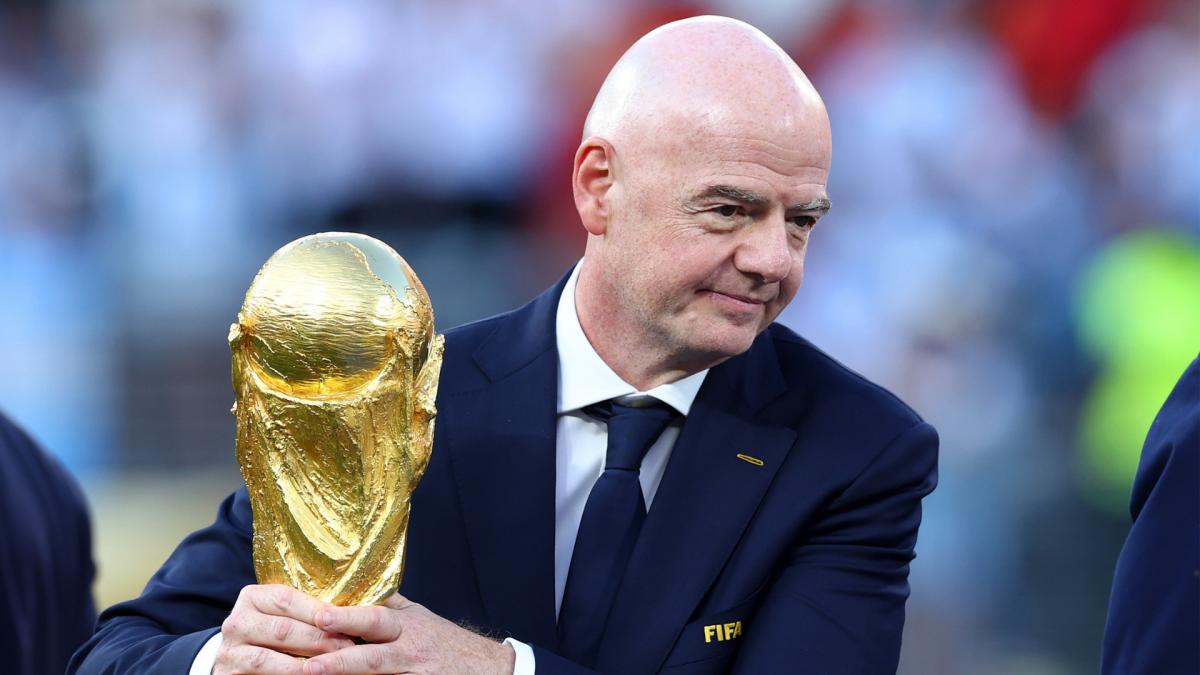
In less than three days, the future of soccer has drastically changed. It was last Tuesday when The Times reported on new plans of FIFA president Gianni Infantino to sell stakes in the World Cup to private investors via the so-called FFE (FIFA Forward Enterprise) plan. It was a rush job with a September 19 deadline to back his plans to sell stakes in the World Cup or face a 75% reduction in potential funding from the deal.
The news immediately sparked chaos and criticism around the world, especially from Aleksander Ceferin’s UEFA. The European soccer governing body immediately opposed the idea, proclaiming, “None of us are the owners of football. It is not FIFA’s to sell.”
A few days later, following statements from numerous soccer confederations and national federations around the world, as well as widespread criticism from the media and fans, Infantino announced that he would no longer pursue the plan. However, despite his U-turn, the fallout from his disastrous bid continues to reverberate atop the sport. His chances of being re-elected as FIFA president in 2027 for another term may have been seriously damaged by the way the entire affair was handled.
What was the FFE?
FIFA announced this plan in a release claiming immediate financial benefits across the world to “expand football development,” but the main sticking point was the creation of a subsidiary “bringing together FIFA’s commercial rights – spanning broadcast, sponsorship, ticketing, and licensing – with the operational delivery of FIFA tournaments.” FIFA added that a consultation process has begun.
The proposal would have required significant private-sector investment, making it one of the most controversial elements of the plan. The Times reported that Infantino was expected to become commissioner of the new entity, potentially after securing what was anticipated to be a further term as FIFA president next year. FIFA was seeking to raise up to $8.2 billion in capital and approached Josh Kushner’s Thrive Capital as one of its prospective cornerstone investors, while J.P. Morgan worked with FIFA as a strategic partner on the project.
FIFA said it would retain sole control of the organization, with “exclusive authority over football governance, competitions, the match calendar, and all regulatory and sporting decisions.” The proposal was subjected to approval by FIFA’s 211 member associations: Alongside FFE, FIFA also planned to launch the FIFA Fast Forward Programme (FFFP), under which all 211 members would have been eligible to access up to $20 million per member in one-off capital funding.
From boycott to loss of confidence
UEFA, the European governing body of soccer, immediately opposed the controversial idea proposed by Infantino, and announced on Thursday they were ready to boycott all the FIFA tournaments, such as the World Cup, if the plan went through.
“The World Cup is not for sale. It is both irresponsible and indefensible that a proposal of such significance for football was conceived in secret and brought to the brink of approval without any meaningful consultation with those entrusted with stewarding the game. No UEFA national teams will participate in any FIFA competition for so long as these proposals remain alive, unless this proposal has been abandoned in its entirety and binding assurances have been given that FIFA will never again open its governance or competitions to private ownership. Nobody should be in any doubt: UEFA and its national associations will oppose these plans with absolute determination. There are moments when institutions are judged not by what they are prepared to accept, but by what they refuse to compromise. This is one of those moments. Some things are simply too important to sell.”
However, despite Infantino’s decision to abandon the plan, UEFA did not back down and announced on Saturday that it had lost confidence in the FIFA president, calling for a change in the organization’s leadership.
“We cannot keep going on like this with secret schemes on fast-track timescales. It is right that, in the coming days and weeks, UEFA will work with its associations and in close cooperation with other confederations to reflect on how this happened and devise a plan to make sure that it cannot occur again. That review should be thorough and fundamental. No option should be off the table. This is a victory for the whole game. But it must not be the end of the story.” UEFA president Ceferin didn’t attend the World Cup final between Spain and Argentina on July 19, an episode that showcased the tension between the two bodies even before the recent week.
Multiple European federations, including England’s FA, supported UEFA’s loss of confidence in the current leadership. “We fully support UEFA’s position. It is time for a full and robust review of FIFA’s leadership and governance to ensure that the global game is run transparently, for the benefit of all 211 member nations and with the long-term stewardship of football at its heart”, the English FA wrote in a statement.
CONCACAF have also supported UEFA’s statement: “As mandated by our Member Associations, Concacaf’s FIFA Council members will engage directly, and through the FIFA Council, to ensure that questions of governance, accountability and leadership are addressed properly through the institutions and procedures established under the FIFA Statutes.”
Others, including Morocco, which will co-host the 2030 FIFA World Cup, and the Qatar Football Association, whose country hosted the 2022 tournament, have publicly expressed their support for Infantino.
The 2027 elections
The next major milestone in this long and twisting saga is the FIFA presidential election in March 2027. The biggest question now is whether Infantino will make it until then, let alone still have enough support to seek re-election despite UEFA’s loss of confidence, and whether he will choose to run regardless. His position appears increasingly precarious, while his personal ties to American President Donald Trump have also become a source of division within the global soccer and political community. Among the most controversial issues is his involvement in the Board of Peace, an initiative established by the U.S. president.
If Infantino doesn’t run again, there are multiple scenarios that could take shape over the next few weeks. UEFA are likely to propose a candidate that can run against Infantino and there are multiple reports that indicate as ideal candidate the current PSG owner and EFC (European Football Clubs) association president Nasser Al-Khelaifi. Victor Montagliani, the current CONCACAF president, has also emerged as a potential candidate. Regardless of the names and the speculation, Infantino’s path to re-election next year now appears significantly more difficult than it did just a week ago.
