
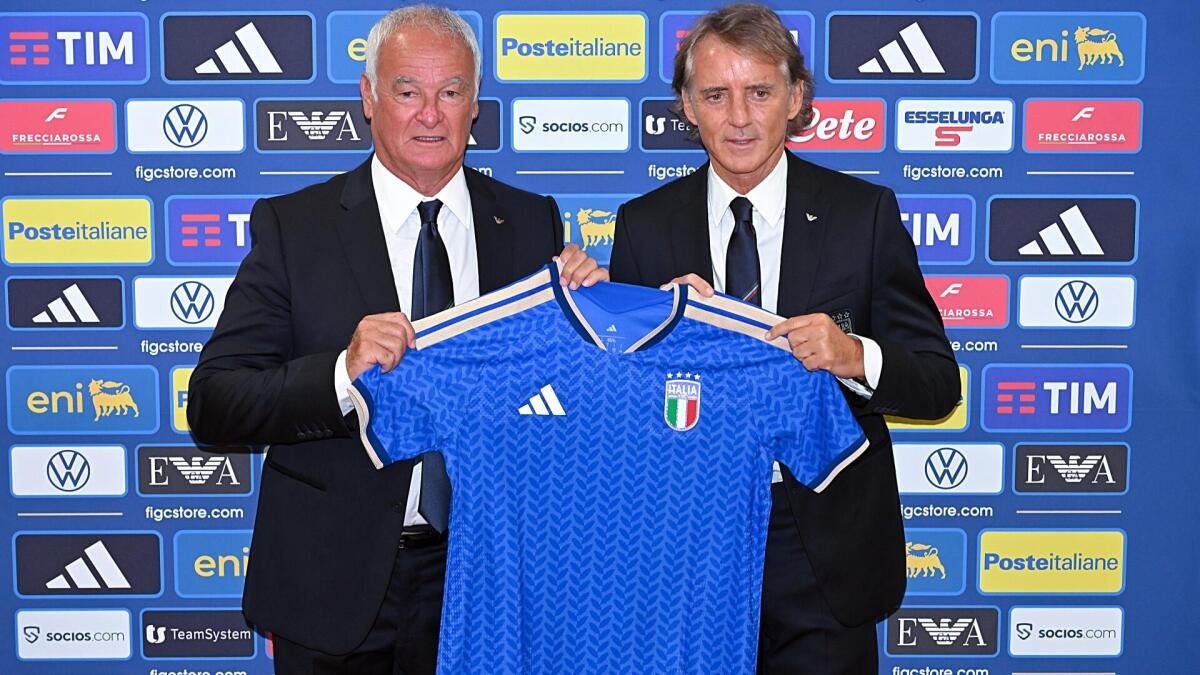
There are some new yet old faces taking charge of the Italian national team. After the disappointment of a third straight failed World Cup qualification in March, Italy’s soccer hierarchy has changed. There is a new FIGC president, Giovanni Malago, and two familiar faces leading the Italian national team. Roberto Mancini has returned as head coach after guiding the Azzurri to victory at Euro 2020. His first spell ended following Italy’s failure to qualify for the 2022 World Cup, after which he took charge of the Saudi Arabia national team in the summer of 2023 before making his return. After both Paolo Maldini and Leonardo resigned from their roles only 17 days after being appointed as technical director and advisor of the new project, former AS Roma and Leicester coach Claudio Ranieri was called to oversee the technical direction of the so-called Club Italia, which includes the Italian national team and the youth national academies.
Their goal is to bring back the Azzurri to the top, but it won’t be an easy job at all. Since 2006, the last World Cup won by Italy, the Azzurri have failed to qualify three times for the World Cup, making the last two decades the most disappointing in the glorious history of Italian soccer, despite winning one European championship in 2021 under Roberto Mancini.
Here are the three major things both Mancini and Ranieri can do to bring Italy back to the top again:
Italy national team chaos: Andrea Pirlo’s Russia ties, Roberto Mancini returns and Paolo Maldini steps down
Francesco Porzio
The short-term solution: New talents
Both Mancini and Ranieri spoke on Wednesday as they were unveiled in their new Italy roles and both indicated their main goal: find new talented players. It may sound like a vague statement, but Mancini proved during his first spell in charge that he has a keen eye for talent. He is willing to look beyond the obvious choices, scouting players across Italy and even abroad, and he is not afraid to call up footballers who are not yet regular starters for their clubs. By bringing them into the national team environment, he gives them valuable experience and accelerates their development. In his first cycle with the Italian national team, even before winning the Euros in 2021, Mancini was able to call players such as Nicolo Zaniolo before he officially made his debut in the Italian Serie A, when he was playing for AS Roma. Since that game played at the Bernabeu against Spain, Zaniolo started to play regularly also for his club, becoming a key player under Eusebio Di Francesco’s management.
Mateo Retegui is perhaps the best example of Mancini’s ability to identify untapped talent. The former Italy coach played a key role in recruiting players with Italian heritage from abroad, handing Retegui his first call-up while he was still playing for Tigre in Argentina, where he was born. Within a year, the striker had earned a move to Genoa before joining Atalanta, where he enjoyed a prolific campaign, scoring 28 goals in a single season. His performances eventually secured him a transfer to Saudi Pro League side Al-Qadsiah, where he has played since 2025. On top of placing his trust in the young talent already available, Mancini will almost certainly continue to search for new prospects, both in Italy and abroad, who can strengthen the national team in the years to come as he did in his first term.
Working with the U-21 team
While Mancini will be more involved in working for a short-term solution to improve the level and the status of Italian soccer, Ranieri will have a different task. As a technical director of Club Italia, the organization that oversees the Italian program from a young age, Ranieri needs to work closely with Silvio Baldini’s U-21 team. Baldini, who is widely considered a perfect figure who can help the Azzurrini to improve and provide valuable options for the first team, needs to be supported in the best way possible and both teams need to work together.
Not every player follows the same development path. Some benefit from spending more time with the youth national teams before making the jump to the senior squad, while others are ready to take that step immediately. Striking the right balance will require close cooperation between Mancini and Baldini. In the past, a lack of alignment between the senior and youth setups created unnecessary tensions that ultimately affected the national team badly. Ranieri’s role will therefore be crucial, acting as the bridge between the two sides and ensuring they work towards the same long-term vision for every single player.
The long-term project
There will also be another figure that will help Mancini and Ranieri in the new cycle led by Malago, and he’s yet to be announced. The third person will need to oversee all the academies and create a method that can be transmitted in the next years. If we take a look at the other countries such as Germany, France and Spain, they all have different but solid methods to grow their talented players from the academies to the first team, something that is lacking in Italian soccer. New infrastructure for youth development must be built, but above all, Italian soccer needs a new vision. For years, according to many leading figures of the sport, such as the same Ranieri and Mancini, coaches and players relied too much on the tactical standpoints from a young age rather than focusing on technique and freedom.
One of the biggest issues in Italian soccer today, certainly not the only one, is the lack of patience in developing young players. Too often, they are asked to fit into rigid tactical systems before they have the opportunity to fully express their individual qualities and sometimes even opt to leave the country before even starting their development. Instead of pushing on creativity and technical ability, the focus is often placed on tactical discipline from an early stage. That is the philosophy that Ranieri and Mancini now appear to be promoting, much like Maldini and Leonardo advocated in the past weeks before stepping down — give players more freedom, prioritize technical quality, and move away from rigid preconceptions about how the game should be played. Whether that approach will succeed remains to be seen, but it shows a significant change in mentality, something that Italian soccer needed for some time. It’s not the only solution to bring it back to the top, but it’s a good start.
